English 4313/5013-X1


Long Ago and Far Away: Tracing the Tradition of Wonder Tales & Savoring the Society of Salonières
Fall 2009

Once upon a time, in Italy,
there lived a man called Giovan Francesco Straparola who wrote The Pleasant Nights (1550/53), and some time later there lived another called Giambattista Basile who wrote the tales known as The Pentamerone (1634-36). A short time later (1690s) a number of French women met in salons to covertly and cleverly critique the social expectations and laws of their time, and so called for changes to women’s rights. Marie-Catherine d’Aulnoy, Marie-Jeanne Lhéritier, and Henriette Julie Murat were three of these spinners of tales. The game of borrowing, subtle allusion, and satire in the traditional literary fairy tale is an intricate web of intercultural and intellectual intrigue. These five writers were a significant influence upon the contemporary of the three women, Charles Perrault, and on those illustrious German tale tellers of the 19th century, the Brothers Grimm and their English counterpart Joseph Jacobs; however, due to the powers of canonization (and of Disneyfication) Perrault and the Grimms are the most well known today. In this course we will use Jack Zipes’s Norton Critical edition The Great Fairy Tale Tradition: From Straparola and Basile to the Brothers Grimm (ISBN: 978-0393976366), Marina Warner’s Wonder Tales: Six French Stories of Enchantment (Oxford UP ISBN: 978-0195178210), and Joseph Jacobs’s English Fairy Tales (Dover ISBN: 978-0486218182) to explore the works of these seven writers particularly, but others as well, in order to come to an understanding of “how th[is] literary genre evolved in Europe and in Nor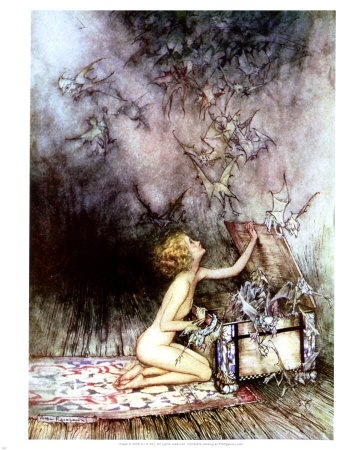 th America from the sixteenth to the nineteenth century” (Zipes xiii). We will add to the critical material included in this textbook the work of important scholars in the field, including Ruth Bottigheimer, Maria Tatar, Marina Warner, and more of Zipes, a prolific and wide-ranging scholar, in order to contextualize the tales historically, culturally, and socially. The scholars listed draw primarily upon feminist and Marxist theories; we will also consider reader response and narrative theories in our comparisons of audience address. Finally, we will consider the relevance of these old tales upon literature more broadly and their continuing influence upon our own time. (Having completed Engl 3983 will be an asset.)
Note: all books are available at The Box of Delights, 466 Main St. in Wolfville (and not at the University store). If checking availability on Box of Delights website, use the isbn number (provided above). If you already own some of these books, that's fine, no need to worry about the edition.
Arthur Rackham “Pandora’s Box”
Syllabus Assignment Outline Acorn
last update Sept. 4 2009
