

Acadia celebrates $716,000 of NSERC Discovery Grant Funding
Acadia University faculty were recently awarded five Natural Sciences and Engineering Research Council (NSERC) Discovery Grants, totaling over $716,000 in research funding.
The NSERC Discovery Grant Awards support research excellence and strengthen Acadia’s research culture by resourcing innovative longer-term projects that will have a societal impact both at home and abroad. This critical research funding allows Acadia faculty to develop new ideas, train highly qualified students and postdoctoral researchers, and respond to emerging scientific issues and opportunities.
“Discovery driven research is central to Canada’s future as a leader in innovation,” notes Dr. Peter Ludlow, Acadia’s Vice-Provost of Research and Innovation, “and Acadia’s faculty remain leaders in advancing knowledge through research, innovation, and mentorship.”
Here is a look at the research that the NSERC Discovery Grants are helping to make a reality:
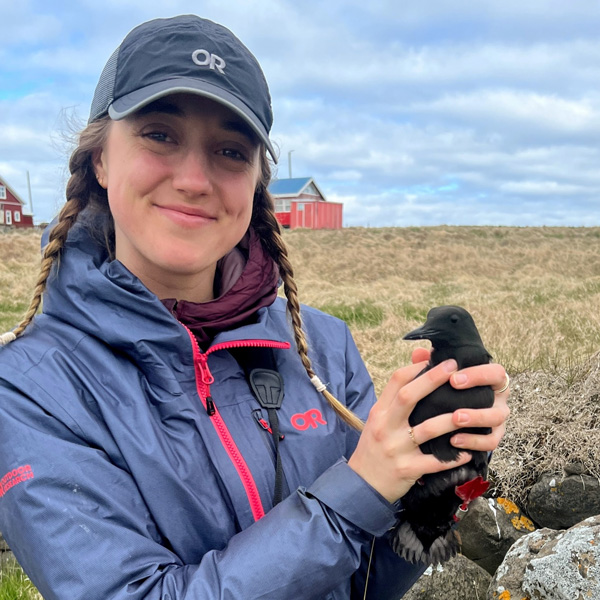
Researcher: Julia Baak (Biology)
Awarded: Discovery Grant for $190,000; Dr. Baak was also awarded $12,500 in funding from the Discovery Launch Supplement program for this project.
Project: A five-year study entitled, “Uncovering threats to King Eiders and Pacific Common Eiders in the western Canadian Arctic using movement ecology and Indigenous Knowledge”
Why this research matters: Globally, marine birds are facing multiple, cumulative stressors, including climate change, pollution, coastal development, and expanding industrial activity. These challenges are amplified in the Arctic, which is warming faster than anywhere else on the globe, driving rapid changes in the ecosystems that millions of marine birds rely on. This research project, with the integration of Inuit Knowledge, will establish a framework to assess the ecology and health of two important sea duck species: King Eiders and Pacific Common Eiders in the western Canadian Arctic. This holistic framework will provide a comprehensive understanding of the factors influencing eider populations throughout their annual lifecycle.
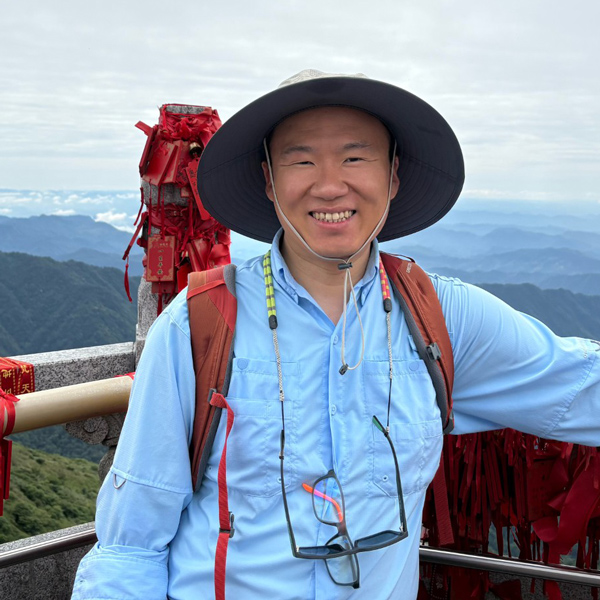
Researcher: Zhenhao Zhou (Earth and Environmental Science)
Awarded: Discovery Grant for $175,000
Project: A five-year study entitled, “Temporal evolution of plutonic-volcanic systems from magmatic to post-magmatic stages: implications for rare-earth-elements mineralization”
Why this research matters: The migration of magma and fluids in Earth’s crust redistributes heat and mass and, in some systems, concentrates elements into ore deposits mined since ancient times. This program investigates how granite-based magma systems form rare earth element (REE) deposits, which are critical for technologies such as electric vehicles and renewable energy. By tracking the timing of magma emplacement, cooling, mineral formation, and volcanic activity, the project aims to better understand how these deposits develop. Additionally, this research project will help train the next generation of Canadian petrologists working in critical mineral exploration and development.

Researcher: Nancy Clarke (Mathematics and Statistics)
Awarded: Discovery Grant for $170,000
Project: A five-year study entitled, “Some Problems in Graph Theory”
Why this research matters: Dr. Clarke’s research will advance knowledge in the field of graph theory and make significant and impactful contributions to the graph theory literature. In addition to keeping Canada at the forefront of such mathematical research, there are a variety of practical applications of the proposed research program, including network security, criminal apprehension, and modelling the spread of viruses such as influenza.
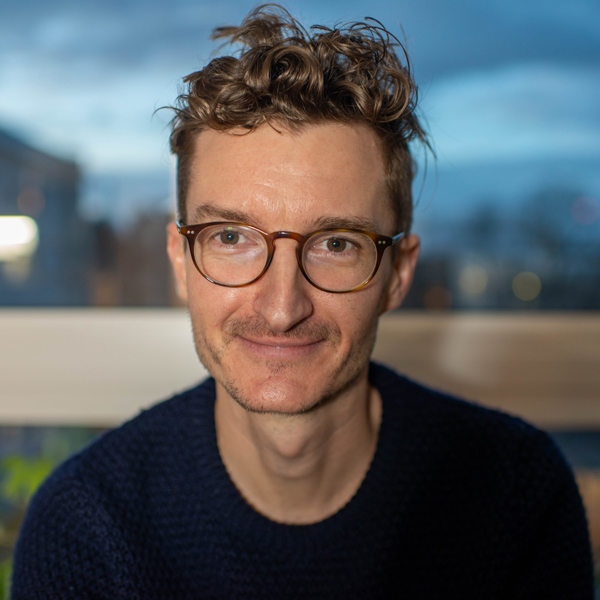
Researcher: Daniel Lametti (Psychology)
Awarded: Discovery Development Grant of $44,000
Project: A two-year study entitled, “Sensorimotor Control in Bilingual Speech”
Why this research matters: This research program will study bilingual speech processing and will advance our understanding of the differences between first and second language speech motor representations in bilinguals in relation to second language experience and proficiency. By dissociating perceptual and motor representations experimentally, the research has the potential to extend contemporary theories of second language speech to include limitations in second language speech motor control.
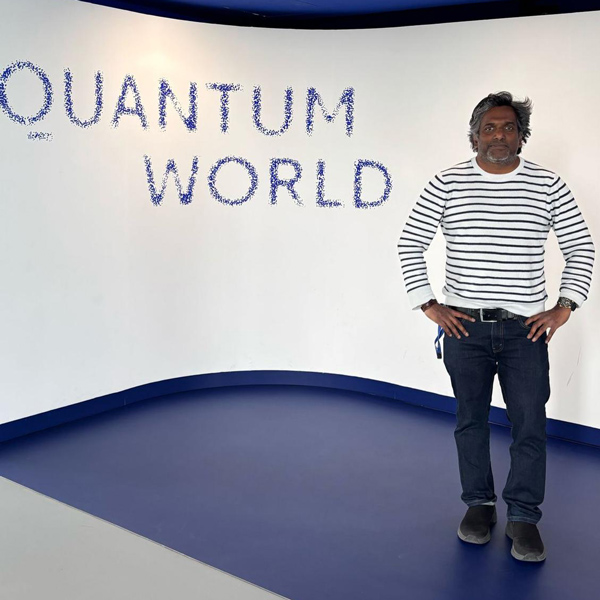
Researcher: Ruben Sandapen (Physics)
Awarded: Subatomic Physics Discovery Grant of $125,000
Project: A five-year study entitled, “Advancing a three-dimensional light-front holographic framework for hadrons and probing rare B decays”
Why this research matters: Ordinary matter can be broken down into atoms, atoms into electrons and nuclei, nuclei into protons and neutrons-the members of a larger family of particles known as hadrons. Although we know that hadrons are made of quarks and gluons, these two particles can never be isolated: they are permanently confined inside the hadrons. This research tackles this problem using a powerful idea known as the holographic principle to better understand the behaviour of quarks and gluons inside hadrons. This investigation will be informed by high-quality data collected at existing experimental facilities at CERN and Jefferson Lab, and contributes to the training of the next generation of Canadian researchers.