

Author Amanda Peters on starting conversations, sharing stories, and learning empathy
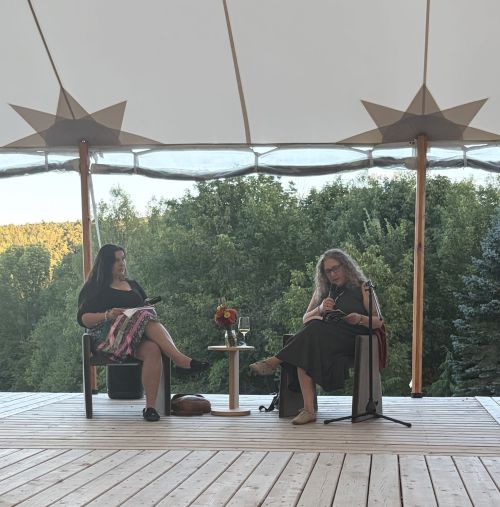
Whether she’s teaching literature or writing it herself, Amanda Peters’s goal is the same: to start important conversations and broaden a reader’s empathy.
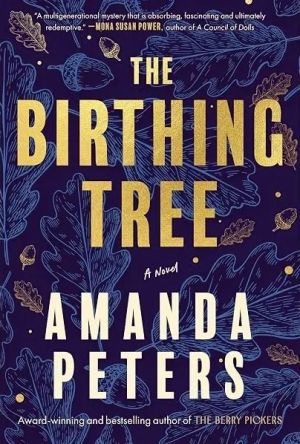
“I tell this to my students all the time,” she told the Globe and Mail in an interview about her new novel, The Birthing Tree, which hit shelves this September. “Readers of fiction are just better people, because readers of fiction have increased empathy, scientifically. When you’re reading fiction, you get to step into another person’s world.”
The world she welcomes readers into in her two novels, The Berry Pickers and The Birthing Tree is one of Mi’kmaq culture and heritage, joy, heartache, family, trauma, and coming home. And readers have been eager to take her up on the invite into her tales inspired by her life growing up in the Annapolis Valley.
Though she moved away for a period of time, living as far afield as Europe and Asia, Amanda is now back home, teaching writing and Indigenous literature at Acadia University.
But right now, she’s on her book tour for The Birthing Tree. The reception of both novels has been warm, to say the least (check out the awards Berry Pickers picked up). The Berry Pickers has been translated into 27 languages, and so far after just a month on the shelves of bookstores, The Birthing Tree is already in 11 languages.
A soft entry into a difficult subject

Amanda recalls asking her American publisher why The Berry Pickers is so popular internationally. She replied that it’s because her novel is “a soft entrance into a difficult subject.”
Amanda’s books deal with challenging topics like missing and murdered Indigenous women and girls, the attempted erasure of Indigenous peoples and cultures, and the outlawing of cultural practices like midwifery.
“People want to have those conversations, but they don’t know where to start,” she explains. And her novels give them a way to talk about it.
For Amanda, starting challenging conversations is part of the responsibility of being a descendant, alongside sharing knowledge about Mi’kmaq culture.
“Because there’s been so much attempted erasure of the people, of the culture, of everything, being a descendant comes with a responsibility to tell the stories. I think it’s really important that non-Indigenous people see it. They don’t have to copy it, they just have to respect it and be an ally.”
She says that even though her novels are fictional, there’s some truth at their core. The Berry Pickers is based in part on her dad’s stories of picking berries.
“And now the world knows that the Mi’kmaq people go to Maine to pick berries, and they didn’t know that before!”
The Birthing Tree does the same thing but with Indigenous midwifery traditions and ceremonies surrounding childbirth. “It’s spreading these ideas about traditions, how beautiful they are, and how we have to protect them.”
“Ultimately, I always just want people to close the book and say ‘that was a really good story.’ that’s why we do what we do; we want people to enjoy it. But if it starts conversations, how cool is that?”
The Seven Sacred Teachings
Her ability to start meaningful conversations is a big part of what Amanda brings to her classes at Acadia. She teaches a few courses regularly: Indigenous literature, critical reading and writing, and a creative writing workshop.
What she wants students to get out of her classes is to learn to have difficult conversations, get a bit uncomfortable, and engage in them with openness, empathy, and respect.
This is especially true for her creative writing workshops, which have a maximum of 12 students each time she runs it. “You have to be really vulnerable to workshop something you’ve created,” she says. “I know putting your stuff into the world is like putting your soul out there.”
She always begins by laying the groundwork for having respectful conversations through the seven sacred teachings: love, humility, honesty, respect, courage, wisdom, and truth. They provide guidance on how to live in harmony with all our relations—essentially, how be a good person in respectful relationship with others.
With that basis, Amanda guides her students through the practice of providing thoughtful feedback and being comfortable with the discomfort of vulnerability. Then trusting that their fellow students will treat them with the same respect.
“Each term they come together and became a cohesive group, respect each other, respect each other's work, and I really love that. It makes me so happy to see that and be part of it.”
"We survived and our stories are still here”
Getting to be part of the learning journey of Acadia students is, according to Amanda, “the dream.”
“I always tell people, I get paid to write, talk about writing, read, and talk about reading. I just love it.”
In return, the gift she hopes her students take from her writing classes is confidence, respect, and empathy.
For students who take her Indigenous literature class, she says she wants students to learn to be able to sit with the discomfort and get something out of it.
“I just hope they walk away with more empathy towards Indigenous populations. And to find a joy in it. There’s a lot of trauma, but there’s also so much joy, happiness and humour.”
Beyond the conversations her novels might start, Amanda really hopes that what she communicates to her readers — and her students—is that Mi’kmaq people “are still here.”
“We’ve survived and our stories are still here, and we’re going to keep telling them and trying to revive them.”