
New Acadia Certificate Opens Pathways to Democratic Leadership
Acadia University has long offered a transformative education to undergraduate students. Now, with the launch of its newest undergraduate certificate, it is expanding opportunities for learners to engage in university-level study. Whether they’re Acadia students or professionals looking to level up, this new certificate program creates flexible pathways that complement, enhance, or stand alongside a degree.
The Certificate in Democratic Leadership is a five-course undergraduate certificate for anyone who wants a serious grounding in Canada’s political system, democratic institutions, and the practice of public leadership. Current Acadia students can earn it alongside their undergrad degree (earning credits towards their degree!), while professionals, aspiring elected officials, alumni, and lifelong learners can pursue it as a stand-alone credential. The certificate can also serve as a pathway into future studies.
Supported by the Jarislowsky Foundation, the certificate is part of a broader national effort to strengthen democratic leadership and public trust in Canada.
Designed for Flexible Learning
In partnership with the Jarislowsky Foundation, Dr. Alex Marland (Politics) led the certificate’s creation, Acadia’s Jarislowsky Chair in Trust and Political Leadership and a Professor of Canadian Politics. From the outset, the program’s design was driven by accessibility and reach.
“A key target audience, for example, is political staff who are employed in capital cities throughout the region and would never be able to come to Wolfville to attend a class on campus,” says Dr. Marland. The certificate is available on campus and online, and will be offered in a fully asynchronous format through Open Acadia beginning in 2027, making it accessible to learners anywhere.
It is the only certificate of its kind among Canada’s five Jarislowsky Chair institutions that will be available entirely online. Learners can take things at their own speed; the certificate courses are self-paced and offered asynchronously (not everyone has to take in the lectures and turn in assignments at the same time). That also means that people who are ready and able to dive in headfirst can complete the certificate in as little as one year.
“Mr. Jarislowsky is fond of saying that we have training for accountants and lawyers, but not for politicians,” says Dr. Marland. “We need to support Canadians with knowledge about high ideals of elected office and good government.”
What the learning actually looks like
The certificate combines a strong foundation in political theory with opportunities to apply that learning in practical contexts. One standout example is Getting Elected in Canada, a course in which students work together to role-play as they develop a campaign plan for a hypothetical candidate.
“These courses are foremost university courses, so that means anchoring course content in scholarly books and journal articles,” says Dr. Marland. “But it also means talking about current events, bringing in guest speakers, and designing assignments that have a bit more practical application than perhaps some other courses might.”
Guest speakers have included Liberal Minister Sean Fraser, 23rd Chief of the Privy Council Michael Wernick, and local MLA Julie Vanexan — practitioners with firsthand insight into the realities of political leadership and public service.
What this student’s experience tells us
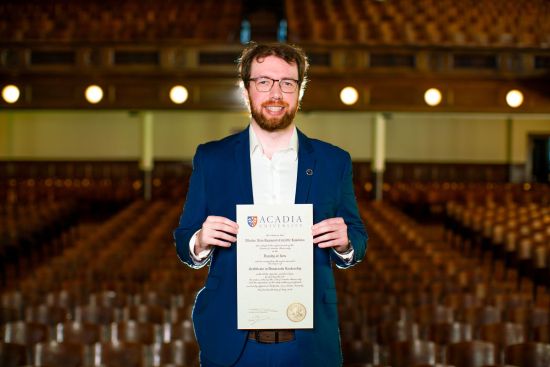
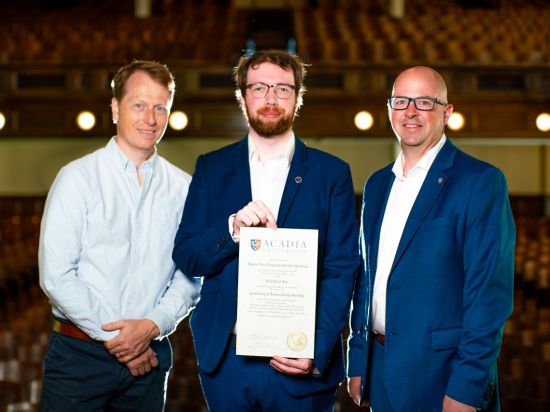
Nik Cutcliffe Kymlicka (’26) became the certificate’s first graduate this spring. His experience offers an early look at what the program delivers, and a preview of what it could mean for the much broader audience it was designed to reach.
The program helped sharpen his undergraduate research focus and will inform the master’s work he begins this fall in Political Science at Dalhousie University. But the outcomes most transferable to any learner, at any stage of life, were the ones that happened beyond the classroom.
“The field trips have broadened my mind to the different avenues in politics, both in the public and private sector,” he says. “These opportunities have also given me a chance to network with individuals in different places in politics.”
In June 2026, Nik visited Ottawa with Dr. Marland and fellow students for the Canadian Political Science Association conference, with travel supported by the Jarislowsky Foundation. The trip included a private tour of the Supreme Court of Canada, a meeting with the Deputy Clerk of the House of Commons, and an exclusive behind-the-scenes look at the Centre Block rehabilitation project on Parliament Hill.
“I got to see the finalized plans of Parliament, along with how it is progressing, and some of the history of the building,” Nik says. “The Deputy Clerk taught us about his role in Parliament and the process of passing laws in Canada.”
Whether you’re 21 or 71, that kind of access — to institutions, senior public servants, and the networks that shape political life in this country — is available to anyone who enrols in this program.
Nik’s advice? “If anyone is contemplating taking it, I believe they should do it.”
Expanding opportunities for learners
The launch of the Certificate in Democratic Leadership in itself is exciting, and it also marks the expansion of Acadia’s certificate offerings, joining the Certificate in Mathematics Teaching. It’s all part of the university’s growing range of flexible, credit-bearing credentials.
Next up is a reimagined Certificate in Computer Science. Like the certificate in Democratic Leadership, it will create new opportunities for students from any discipline to earn the credential while completing their degree, or a new pathway for learners to build on their studies over time.
Dr. Lauren Wilson Finniss (Vice-Provost, Curriculum and Planning) is excited to see Acadia’s expanding certificate offerings at the undergraduate, post-baccalaureate, and graduate levels.
“Learners will have greater opportunities to gain specialized knowledge, complement a degree, or return to university at different stages of their educational and professional journey,” she says. “The certificates offer flexibility while maintaining the academic quality of university study.”
The Certificate in Democratic Leadership is open now for on-campus students, with online delivery through Open Acadia arriving in 2027.