
No healthcare problem too big for Acadia's interdisciplinary teams of researchers
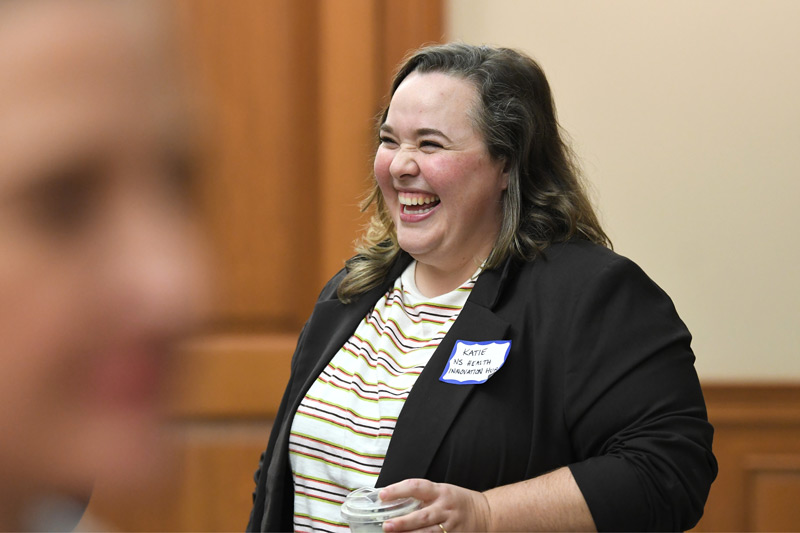
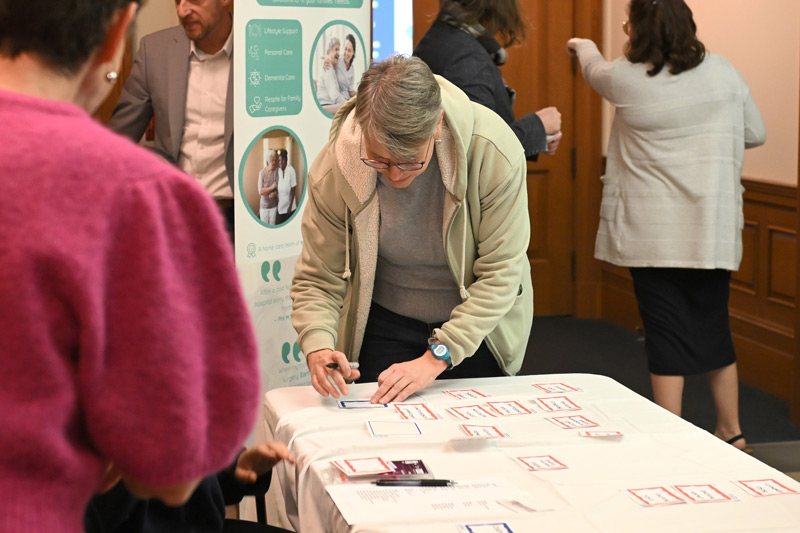
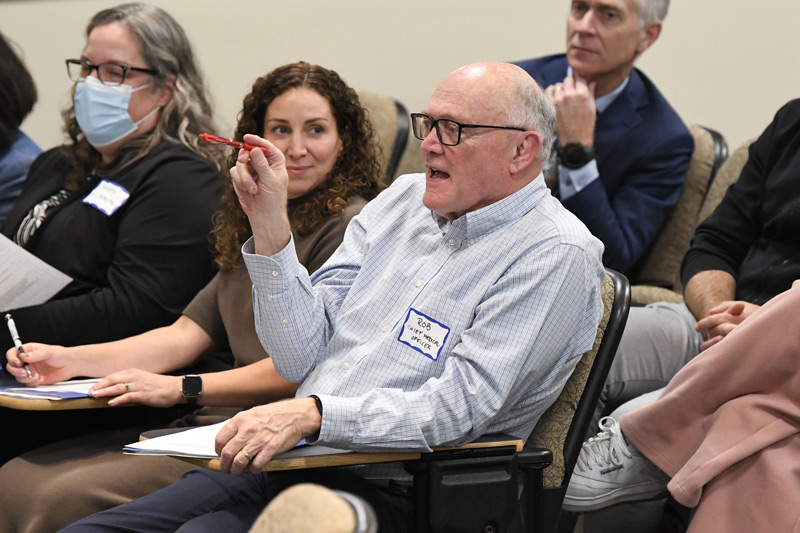
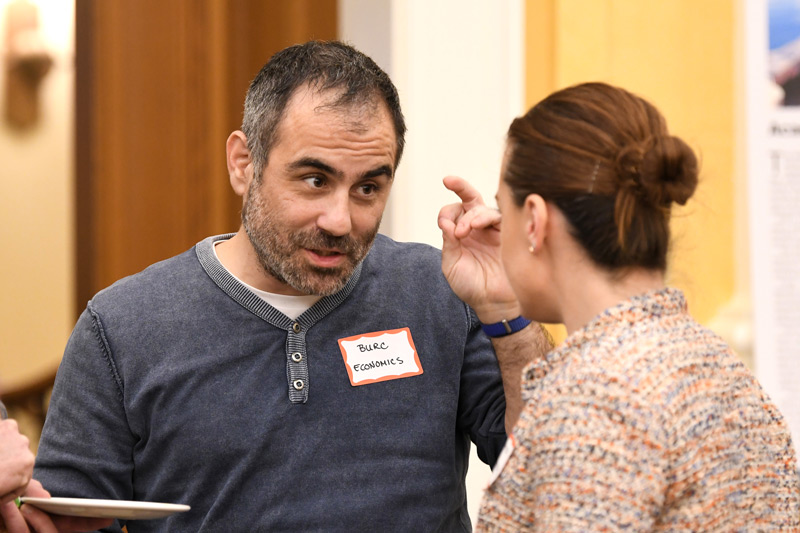
The K.C. Irving Centre was bustling with excited academics last Thursday night. Faculty members from across the disciplines at Acadia gathered to present their solutions to the stickiest challenges facing the health of rural Nova Scotians.
The evening also marked the official launch of Acadia's Health and Wellness Institute (HWI), led by Dr. Jonathon Fowles (Kinesiology).
As the inaugural event of the HWI, Acadia's first faculty health innovation challenge tasked interdisciplinary teams to come up with answers to the question "How can we help Nova Scotians stay healthy at home and access the care they need, wherever they live?"
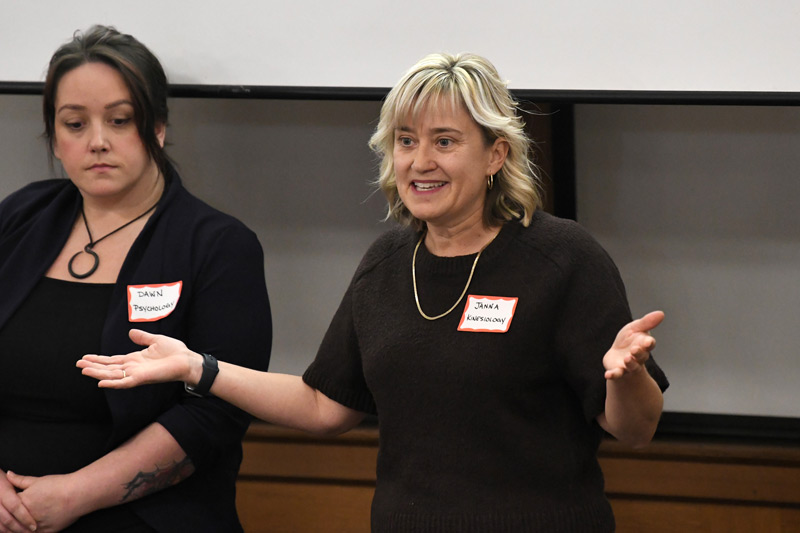
The eight teams included researchers from Sociology to Biology to Nursing, tackling problems from access to safer sex supplies to Parkinson’s interventions. They each got 5 minutes to present a solution to a healthcare issue faced by rural Nova Scotians and convince the judging panel that they deserved one of the three $10,000 grants to carry out their proposed project.
Dr. Ashlee Cunsolo (Provost & Vice-President Academic) kicked off the evening with a welcome address. The rural aspect of the research question is something she was particularly excited about. "There are unique things that can only happen in small universities in rural locations where you have to think about things differently," she says. "That's where the true innovation comes from."
Here's what each of the 8 teams presented:
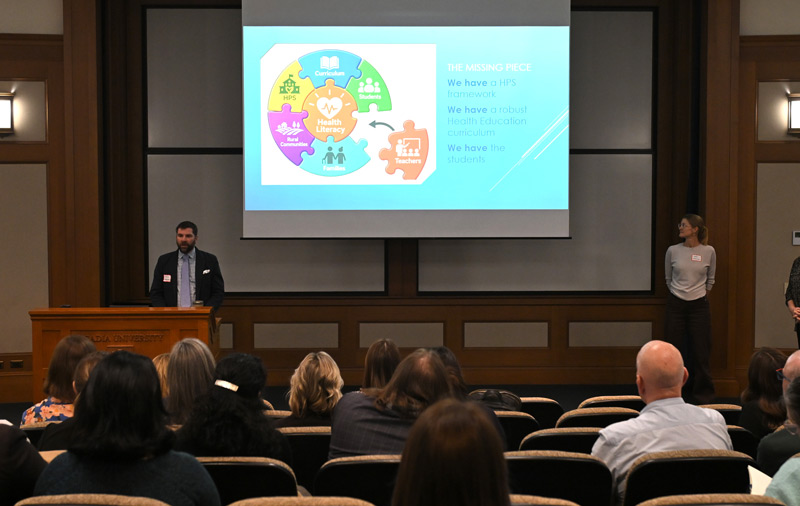
Team #1: Every Teacher a Health Educator: Certificate in Comprehensive Health Literacy
Members: Justin Oliver (Kinesiology), Liesel Carlsson (Nutrition), Ahlam Rahal (Education & Counselling), Beverly McKee (Nursing), Marianne Clark (Kinesiology)
The problem: Health literacy is not integrated in the core curriculum in Nova Scotia and teachers are not specifically prepared to teach health education.
The solution: A new certificate in comprehensive health literacy that will train teachers to become leaders in health education. This will make Nova Scotian a leader in health literacy, reducing the strain on our overburdened healthcare system.
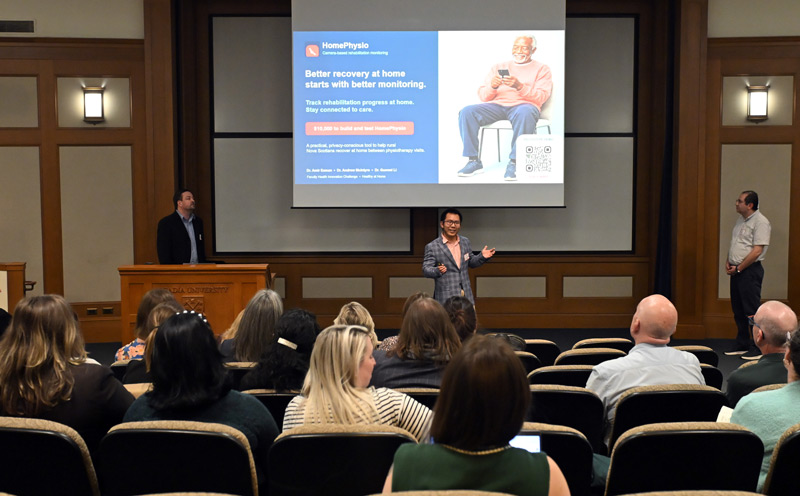
Team #2: HomePhysio: Camera-Guided Home Physiotherapy
Members: Guowei Li (Earth & Environmental Science), Andrew McIntyre (Computer Science), Amir Eaman (Computer Science)
The problem: 41% of Nova Scotians live in rural areas, which makes it difficult for people to access follow up appointments in person and lack a reliable way to make sure home physio exercises are being practiced regularly and properly.
The solution: An app that works offline and tracks repetitions, joint angles and flags improper form. The data can be shared with practitioners, giving physical therapists and primary physicians a clearer picture of what's going on with their patients in between appointments.
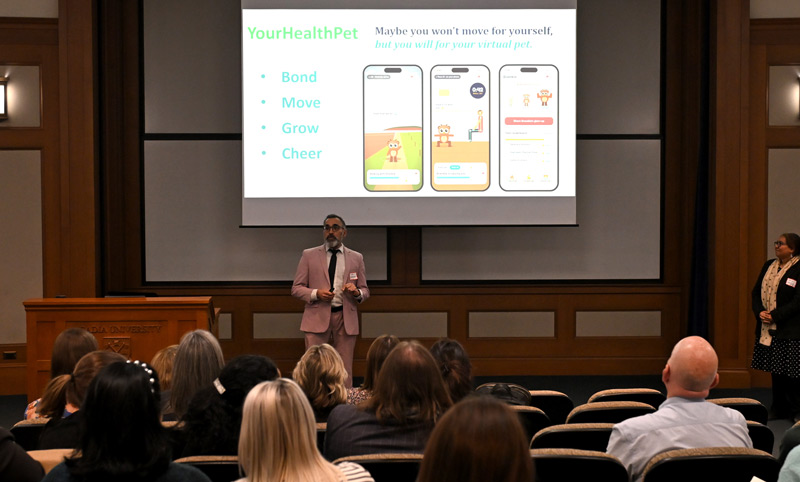
Team #3: YourHealthPet: A Virtual Pet That Gets People Motivated
Members: Sazia Mahfuz (Computer Science), Ken Leslie (Psychology)
The problem: Plenty of people have downloaded the YourHealthNS app, but people rarely open the app or engage with the content despite the platform being one of the major healthcare investments of the provincial government.
The solution: An integrated in-app pet would use behavioural psychology to encourage Nova Scotians to engage in preventative healthcare like movement and accessing upstream resources.
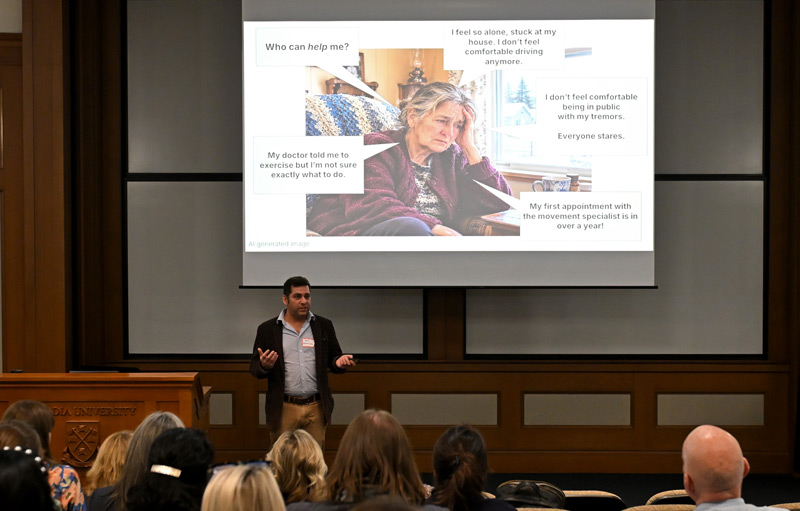
Team #4: FlockVR: A Scalable, In-Home, VR Group Exercise System for Parkinson’s Disease
Members: Lydia Bouzar-Benlabiod (Computer Science), Dan Blustein (Psychology)
The problem: There are 2,480 Nova Scotians living with Parkinson’s Disease. There are long wait times for appointments, care is limited, and the diagnosis often leaves people stuck at home, isolated, and not doing the most effective measure to slow progression: exercise.
The solution: Using VR adapted from Dr. Blustein's stroke rehabilitation research, Parkinson’s patients will be able to have an exercise party in their own living rooms. This will get them moving, slowing the progression of the disease, and engaging in community, breaking the social isolation barrier.
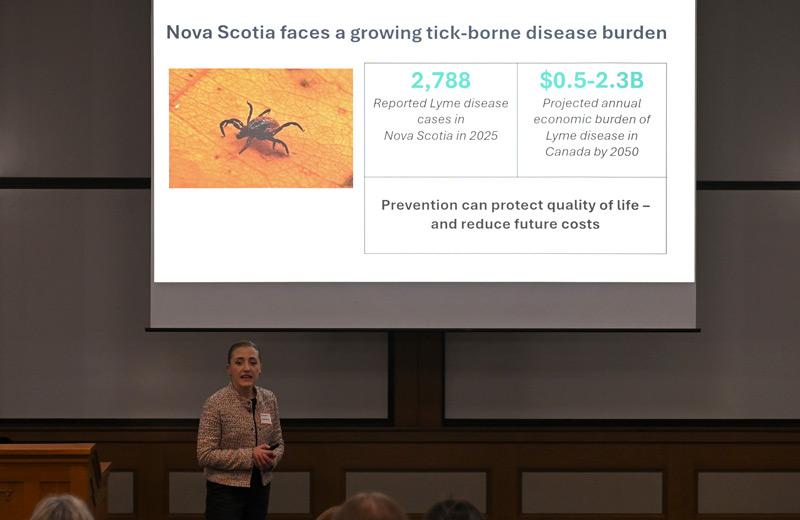
Team #5: Healthy Backyards, Healthy Communities
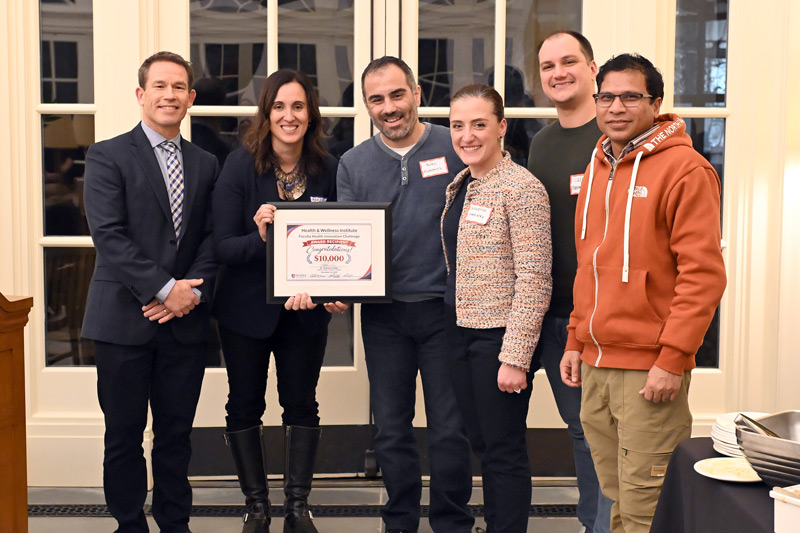
Members: Nicoletta Faraone (Chemistry), Kirk Hillier (Biology), Laura Ferguson (Biology), Burc Kayahan (Economics), Luis Anholeto (Chemistry)
The problem: Ticks. Plain and simple. They're getting worse, and so are instances of the diseases they transmit. In 2025 alone, there were 2,788 cases of Lyme disease diagnosed in Nova Scotia and that number will only go up, leading to an estimated burden of $0.5-2.3 million annual economic impact in our province by 2050.
The solution: The team at the Canadian Tick Research and Innovation Centre has identified a fungus that has a 70% mortality rate in black legged ticks. They are working on formulating a yard spray to reduce tick populations at homes, in schools, parks, and on our trails.
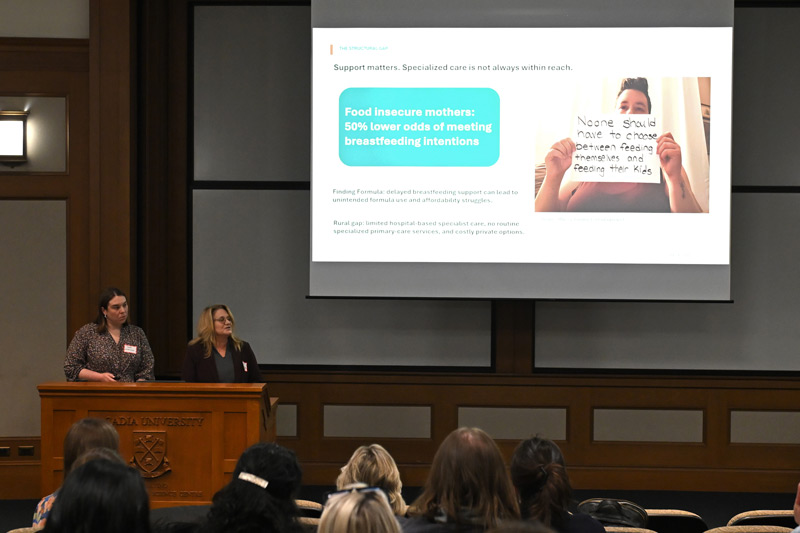
Team #6: Nurturing Equity through Skilled Lactation Support and Trust (NEST): Evaluating the Feasibility of In-Home Lactation Consultant Support for Mothers Facing the Greatest Health Equity Barriers
Members: Jane Francis (Nutrition & Dietetics), Lesley Frank (Sociology)
The problem: Low resource mothers often don't have the help they need to be able to breastfeed. Food insecure mothers have 50% lower odds of meeting breastfeeding intentions. In rural Nova Scotia, lactation support is often not available, leading to cascading problems.
The solution: Adapting Dr. Francis's established in-home lactation model developed in an urban setting, they will connect low resource mothers with lactation consultants. Their solution is not a technology so much as a way of organizing care for parents rather than expecting them to organize their lives around care.
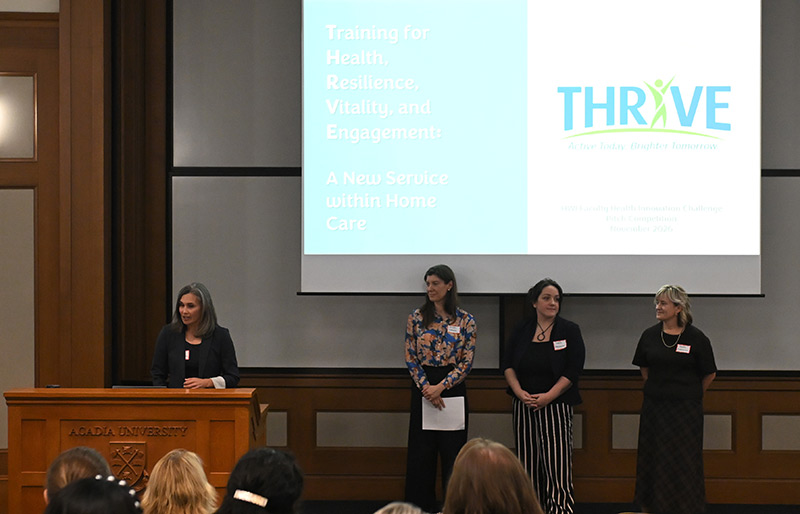
Team #7: THRIVE: Training for Health, Resilience, Vitality, and Engagement. A New Service within Home Care
Members: Karen Kendall (Kinesiology), Dawn Ryan (Psychology), Cassel Busse (Nursing), Janna Wentzell (Kinesiology), Uira Duarte Wisnesky (Nursing)
The problem: Only 30% of older adults meet the recommendations for aerobic and muscle strengthening activities. Nova Scotia Health reports close to the 40,000 people that receive home care including home supports and nursing services receive no physical activity support.
The solution: There's a significant opportunity and need to develop support that reaches these older adults in their homes along with their caregivers, so they can both age in place, reducing strain on an already over burdened healthcare system. THRIVE fills this gap by building on the in-home care already being provided by Clinical Exercise Physiologists and other providers in existing networks.
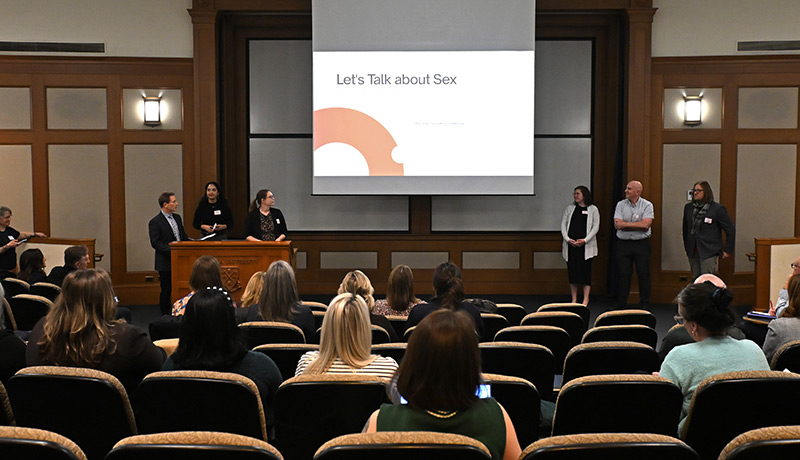
Team #8: Let’s Talk About Sex: Innovating at a Rural University Campus
Members: Maddie Gallant (Nursing), Sydney Breneol (Nursing), Barry Watson (Economics), Paige Moreth (ASU Sexual Health Resource Centre Manager), James Sanford (ED, Student Services), Emma LeBlanc (ASU Women’s Centre Coordinator)
The problem: STI rates are rising nationally and young adults are disproportionally affected. And current sexual health services aren't reaching rural students where they are.
The solution: A discretely located 24/7 sexual health vending machine stocked with free products, essential education, and local service information. This practical and low-cost innovation will provide solutions at the right time, in the right place, and in the right modality.
Before Dr. Fowles announced the winning teams, there was other business to attend to: officially launching the Acadia Health and Wellness Institute (HWI).
The HWI represents an opportunity for research to move beyond the walls of the university and into our communities, Dr. Fowles says.
"The vision for the Institute is that it brings together researchers and partners from government and industry to establish practical solutions that improve health and wellness across the lifespan."
Like the Faculty Health Innovation Challenge, the HWI is about encouraging bold thinking, bringing disciplines together and creating space for innovative ideas, then translating that research into real world impact.
Ultimately, says Dr. Fowles, "the success of HWI won't be measured by projects or partnerships but by the difference we make in communities, peoples' lives, and health and wellness of Nova Scotians."
Drumroll Please!
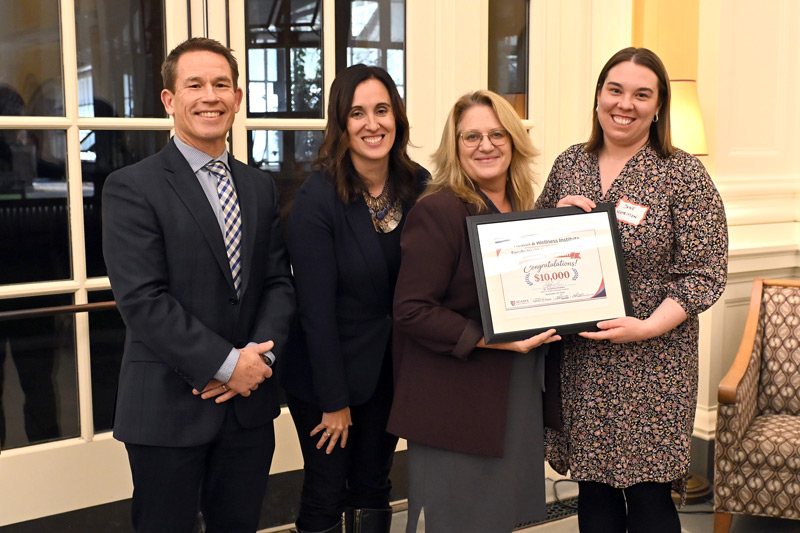
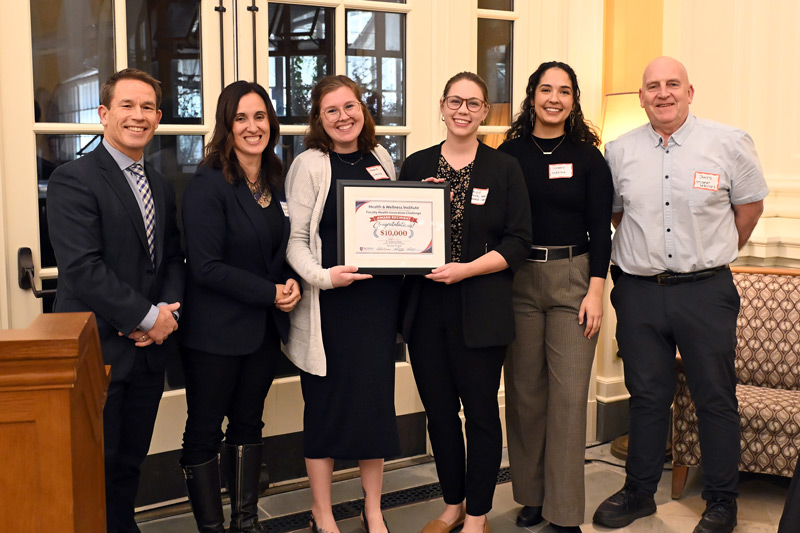
After much anticipation, Dr. Fowles recognized the following teams to receive $10,000 in research funding for their outstanding presentations to develop their ideas:
- Nurturing Equity through Skilled Lactation Support and Trust (NEST)
- Healthy Backyards, Healthy Communities
- Let's Talk About Sex
While only three teams received this round of funding, Dr. Fowles was excited to announce that this isn't the end of the other projects presented that evening. The HWI is committed to helping each of the teams develop their ideas and take them to the next level.
Even though it is just the beginning, the Challenge was an incredible example of what's to come for the HWI, showcasing what happens when researchers collaborate to solve problems in our communities. Dr. Fowles adds that they couldn't have pulled the event off without their sponsors that made the awards for this challenge possible: AltaML, Earth Angels, Shannex, Springboard, IGNITE, Valley REN and Acadia Dining Services.
Stay tuned for more stories on these teams and the difference they're making in the lives of Nova Scotians!