

Turning trauma into training: how Sophia Rae is empowering youth to be resilient

At 14 years old, Sophia Rae’s world shattered.
When she heard the news that her aunt had been killed in the 2020 mass casualty event in Nova Scotia, she says she knew she would never be the same.
“It was in that moment I realized the future that I had so perfectly constructed for myself was all clouded. I didn't really know how I was going to move forward.”
In the aftermath, she developed OCD and extreme anxiety. “The unthinkable had already happened to me,” she says. “And no one could tell me the unthinkable wouldn’t happen again.”
After taking a year off from school, she returned to the classroom. While she was able to receive mental health support, it wasn’t quite what she needed. The teachers clearly wanted to help her, she explained, but they didn’t have the tools or knowledge to show up in the ways she needed them to.
“I realized there needs to be more mental health support for youth. Not only that, we need to hear youth voices at the center of the support that we're receiving.”
Now, Sophia is a psychology student at Acadia with plenty of resilience training under her belt. But back then, Sophia knew that there was a better way forward, and she was determined to bring it into being. If not for herself, then for all the youth struggling with mental health issues and not getting the help they need.
Founding Resilient Youth
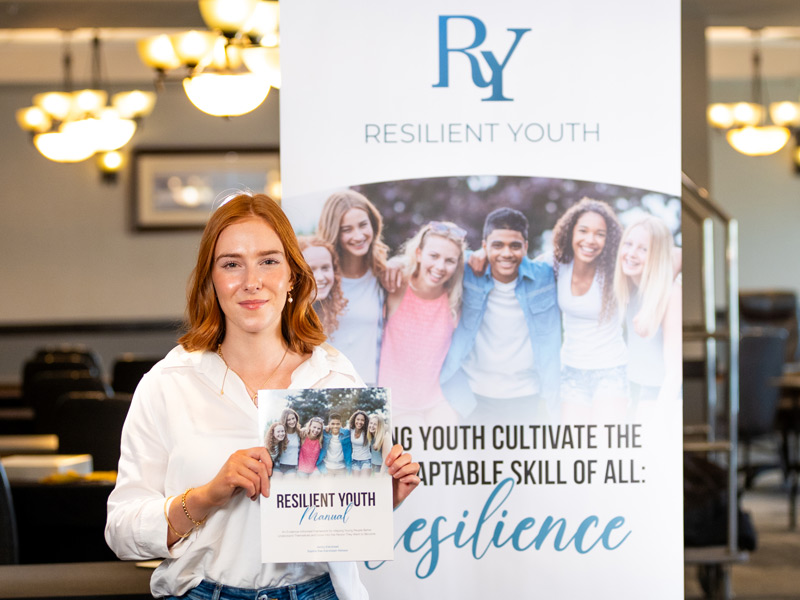
Sophia began speaking about mental health at schools across the province—starting with the school the gunman had attended. Over the course of her remaining high school years, she kept speaking publicly and developed a curriculum on youth mental wellness for educators.
That work led to her founding Resilient Youth, an organization that facilitates peer-led mental health workshops, provides educator certifications, and has developed evidence-based curriculum—the Resilient Youth Manual—designed alongside youth voices and experts.
Sophia worked alongside her parents, Blair Abbass and Jenny Kierstead, who co-founded Yoga in Schools to start the organization. They drew on their decades of experience developing wellness curriculum, along with a professional, trauma-informed framework using mindfulness, psychoeducation, and CBT principles built for the classroom. Sophia brings her first-hand experience navigating mental health supports as a teen, and her passion for making the world a better place.
It’s crucial for educators to know how to care for the mental wellbeing of their students, Sophia explains, because they are sometimes the only consistent adult in a child’s life.
“For me, the school system is more than just teaching curriculum. It's a hub for growth. Kids are finding themselves, interacting with peers, and learning who they are. They're struggling with mental health for the very first time. Those teen years are when you're most vulnerable.”
The teachers that kids spend so much of their time with are the key that can be the difference between developing resilience and spiraling.
Resilience, says Sophia, is about having the toolkit that works best for you. It’s not something that you’re born with or you aren’t; you can learn to be resilient through practice. “The way I think about it is that mental health is the struggle, and resilience skills are the solution.”
Resilient Youth marries clinical expertise and youth lived experience to help educators empower their students to build that toolkit, then practice using it effectively.
“The clinical perspective is very important,” explains Sophia. “That's why I’m studying psychology.”
“On the other hand, sometimes we overlook the knowledge that youth have about their own experiences and the culture they're living in. Sometimes resources feel out of date because they're not created with the world that we're living in at the center of it.”
By the time she arrived at Acadia to begin her undergrad, Sophia was gaining confidence as a public speaker, and Resilient Youth was already a massive success, working with educators across Nova Scotia. Then, she joined Enactus Acadia, met Dr. Kristin Williams, and took Resilient Youth to the next level.
Enacting social change
Enactus is a social enterprise business pitch competition, inspiring students across the world to use entrepreneurship to solve big problems. Over 75 campuses in Canada alone compete each year in Enactus pitch competitions, with regional winners advancing to nationals, then worlds.
Joining Enactus showed Sophia that she didn’t have to be alone in her quest to educate youth about mental health.
“I honestly thought that I would be on a solo journey my entire life with entrepreneurship. I didn't see a future where I would have like-minded people that would be interested in the same things, and Enactus Acadia gave me that.”
That first year with Enactus, Sophia took Resilient Youth to the regional pitch competition where she came in first place in her category. Then, she went on to nationals where she won second place in Youth Empowerment.
Sophia says the journey she and Resilient Youth have had with Acadia and Enactus have been “phenomenal.”
Meaningful mentorship
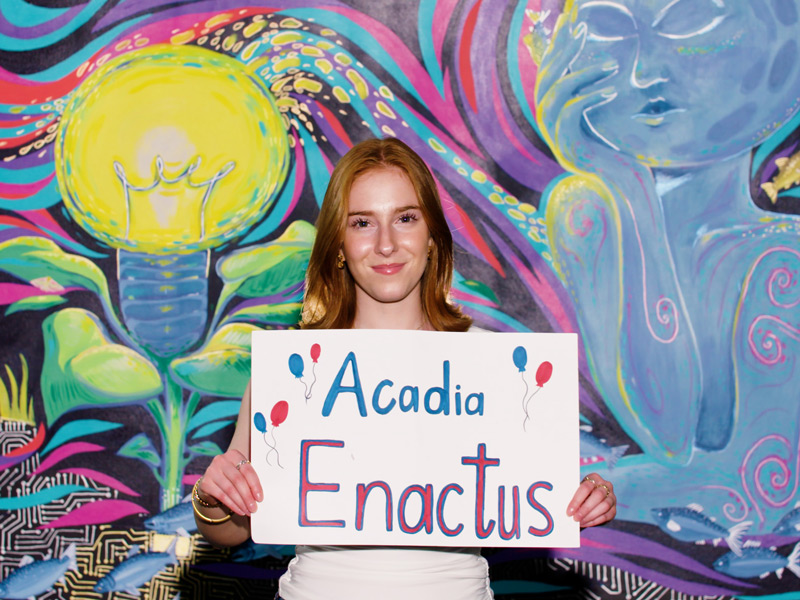
Beyond the support of her Enactus teammates, Sophia has a special coach in her corner, helping her to refine and polish Resilient Youth. After seeing Sophia run-through her pitch at an Enactus meeting, Dr. Williams pulled her aside and asked to mentor her.
“I had a feeling in my bones,” recalls Sophia. “I was like, this is going to change the game.”
For Dr. Williams, mentoring Sophia was a natural fit.
“Resilient Youth is rooted in a genuine desire to make a difference in the lives of young people. Sophia was not simply identifying a problem; she was actively working to create solutions and opportunities for youth in her community. As someone whose own research and community work focuses on youth empowerment and engagement, I immediately saw a strong alignment with my interests and values.”
Sophia says Dr. Williams is “the most amazing person.”
“I can't speak highly enough of her. There's something really special about having such an authentic relationship with someone who's in a position of power, knows so much, and yet sees potential in this work.”
Dr. Williams adds, “it is also worth saying that Sophia makes mentorship easy. She is thoughtful, reflective, and genuinely committed to learning and growing as a leader.”
Beyond Enactus
Outside of preparing for pitch competitions, Sophia has been working hard to grow Resilient Youth. With Dr. Williams’s encouragement and guidance, Sophia applied for and received external funding for the first time. Now, Resilient Youth has received grants from the Mental Health Foundation, the IWK, and the Aidaen Mae Mitchell Foundation.
In July, Sophia led the first Resilient Youth certification at a conference which saw 84 educators from the Yukon to Newfoundland gather in Halifax for two days of learning how to support youth under their care.
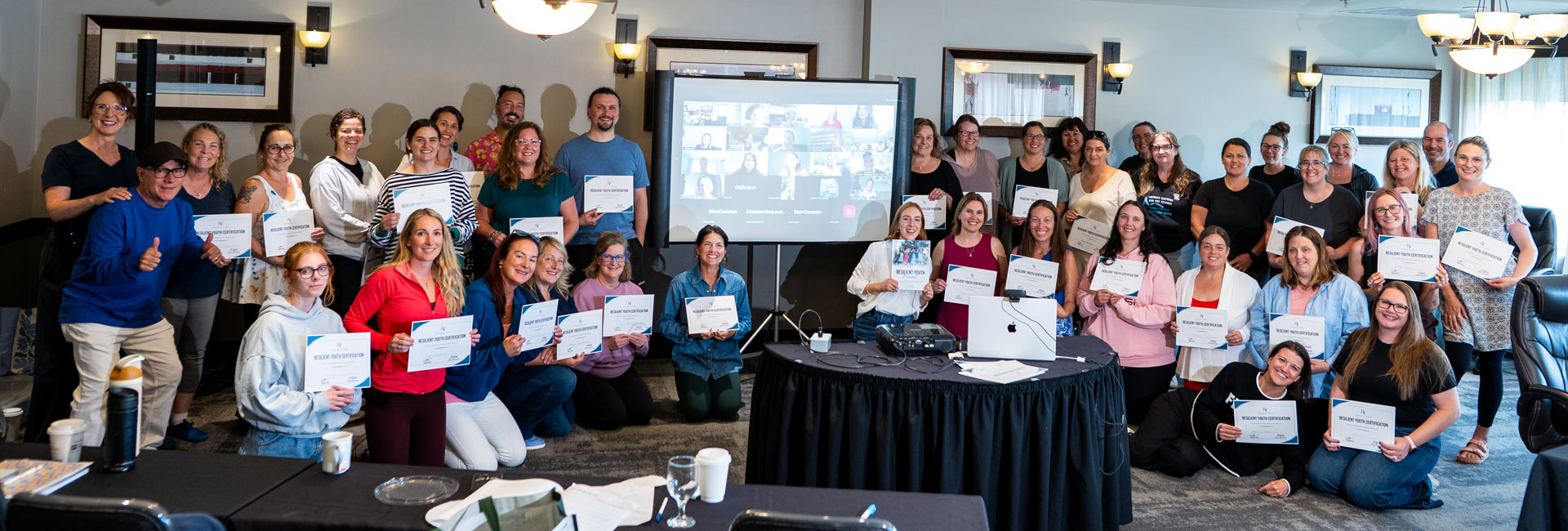
“It's something that I've been working towards for a long time. It was really cool to see it all come together, and also to know that we're equipping those on the front lines with resources that we're really passionate about.”
What started from a place of trauma and pain for Sophia has transformed under her care and passion into a movement. With her first conference under her belt, 1,300 educators worked with, and 40,000 students reached, Sophia is energized to keep growing her work. Dr. Williams is excited to keep cheering her on.
“It has been exciting to watch Resilient Youth evolve,” says Dr. Williams. “But even more exciting to watch Sophia evolve alongside it. The organization has grown because she has grown.”
“Sophia is one of those students who reminds educators why mentorship matters. She has consistently stepped into leadership opportunities and embraced the responsibility that comes with them.”
As of September, Sophia has stepped up into another leadership role as President of Enactus Acadia. Her dreams for the club? To take home nationals this year and make it to the international competition.
Her dreams for herself? Sophia says her goals are “ambitious.” She wants to become a clinical psychologist and go into private practice while continuing to develop Resilient Youth. Eventually, she wants to come back to Acadia, but this time as a professor.
Dr. Williams, Enactus, and Acadia, are all rooting for her.
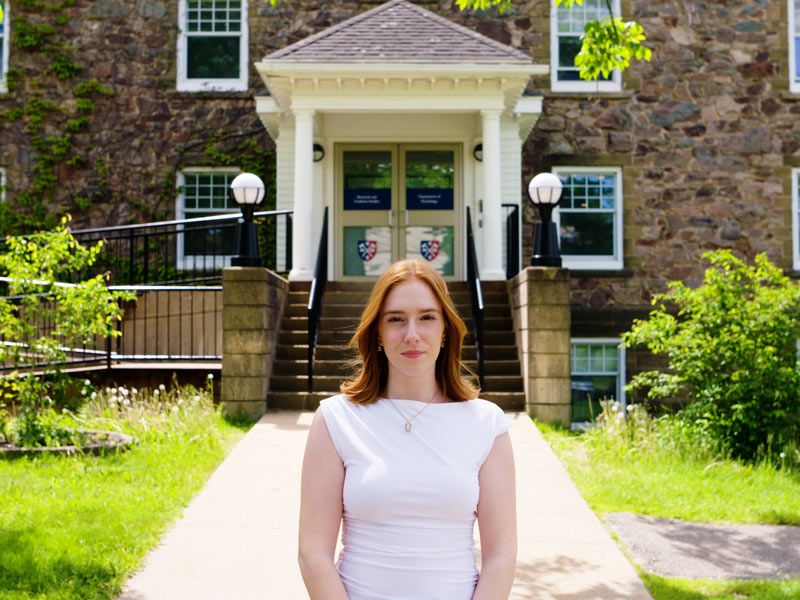
We asked Sophia for one piece of advice about mental health or resilience that she would give to any student. Her answer? There isn’t one.
“Everyone deals with things differently. So, it’s all about building the toolkit of what works for you. It’s about becoming curious about self-care and starting to curate what works for you.”
You heard her! Time to try diaphragmatic breathing, art, exercise, and every other tool out there, then get curious about how they make you feel.