

The long journey home: recovering Lieutenant Lionel Tranter
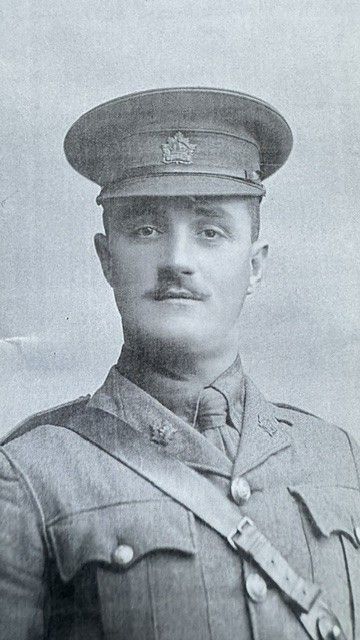
In the muddy trenches of World War I, a young Canadian lieutenant perished on June 15, 1915. Lionel Tranter was 28 years old. As the war ground on, his body was buried in an unmarked grave near Givenchy, France.
Now, with the help of Dr. Aaron Taylor (Earth and Environmental Science) and the Canadian Remembrance and Recovery Project, his family hopes to bring him home.
A FAMILY HERO, A PROTECTIVE BROTHER
After Lieutenant Tranter died, his family in the small town of Southampton, Ontario, erected a headstone in his honour.
“This is family history,” says Lieutenant Tranter’s great-great-niece, Alicia Trelford. “The grave has been empty for 111 years. He was always the hero in the family. He was the protective brother.”
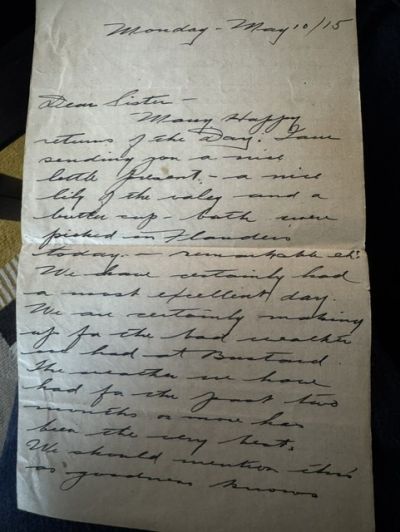
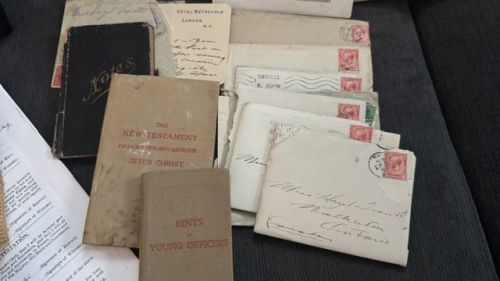
Every year around Remembrance Day, the family reads Lieutenant Tranter’s letters. “In his letters home, he was kind and optimistic,” Trelford says.
“The letters started out with ‘I’m seeing the world, and this is the best opportunity I could have imagined. It’s beautiful here.’ And then we’d read the later letters, where he was apologizing for his handwriting because his hands were shaking and cold, and it was so miserable in the trenches. He would say to his sisters, ‘Please don’t tell Mother of any suffering.’ And to see someone’s spirit broken, ultimately knowing what was about to happen to him, is heartbreaking.”
THE RIGHT MAN FOR THE JOB
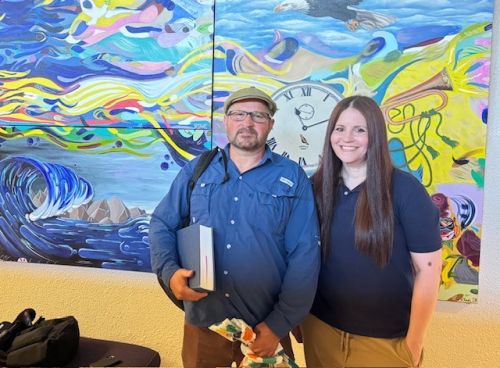
After a century of Lionel’s family mourning his loss over an empty grave, they were approached in 2024 by a local historian who told the family there might be a way to bring him home.
Southampton historian Bill Streeter read a Globe and Mail article about Dr. Taylor’s work to recover the remains of American servicemen in Europe. Streeter, who had spent years successfully researching the stories and battle reports of local veterans who served in wartime, had learned where Lieutenant Tranter had died and where his remains were buried. (A video interview with Streeter about the Acadia project is available online.)
He contacted Dr. Taylor for a professional assessment on whether a recovery would be possible. Learning that it was, he contacted Lieutenant Tranter’s family.
For the past five years, Dr. Taylor has been leading and participating in missions to recover the remains of U.S. service members. The U.S. government’s program began at the grassroots level in the 1980s with families whose sons were missing during the Vietnam War. Dr. Taylor would like to see a similar government-funded program in Canada.
“We know how to do this,” he says. “We have the DNA technology to make an identification from even a bone fragment and provide closure to families.”
In 2023, Dr. Taylor founded the Acadia University Recovery Program, which was renamed the Canadian Remembrance and Recovery project in 2025 to reflect its national scope and mission. The project focuses on the recovery, identification, and commemoration of Canada’s missing-in-action military personnel from World War I, World War II, and the Korean War.
"The Canadian Remembrance and Recovery project exemplifies the power of humanities-based research to recover stories that might otherwise be lost to history,” says Dr. David Duke, Acadia’s Dean of Arts. “By identifying and commemorating Canadians who served and sacrificed, the program deepens our collective understanding of the past and reminds us that remembrance is both a responsibility and a vital part of our national identity.”
Alicia Trelford and the rest of Lionel’s family are excited to be working with Dr. Taylor and the Canadian Remembrance and Recovery project. They’re hopeful that by working together, they’ll be able to bring their family peace.
“We wanted to be involved in any way we could,” Trelford says. “My dad lived with his grandmother, and Lionel was her younger brother. Aaron Taylor got us excited to be part of this. There’s no government funding for this in Canada, but we are passionate about this and as a family have been raising money.”
So far, they’ve raised more than $15,000 of the approximately $25,000 needed for the first two phases of the project. Of that, the Southampton Legion has contributed $9,000, and the family has raised the rest.
“Aaron Taylor filled me with hope that we could actually bring Lionel home,” Trelford says. “I wanted to be a part of the mission, not only for our family’s benefit but for the bigger picture – to get the attention of the government and of Canadian families who may be in the same position. We need a national protocol for this.”
TELLING THEIR STORIES
“Lieutenant Tranter’s story is important to Canadians,” Dr. Taylor says. “I’ve done many public talks and interviews. Hundreds of people have emailed to say how interested they are, how they have a missing loved one and can I help.”
As part of his work to honour missing Canadian service members, Dr. Taylor has had students research them and write their biographies.
“The students were excited to be doing something that could help bring closure to a family,” he says. “They’ve done more than 100 biographies now. In the majority of missing cases, a recovery isn’t possible, but the U.S. believes that for about 35%, it is possible.”
The biographies included the student’s opinion on whether the person’s remains were recoverable. “I remember one student racing into class, saying, ‘Dr. Taylor, I was up all night. I think I found something. I think this person is recoverable!’ To see students get excited about the project was wonderful,” he says.
THE PATH TO RECOVERING LIEUTENANT TRANTER
The project to recover Lieutenant Tranter consists of four phases. Phase 1 is the archival work, which French researchers are completing now. Phase 2, next spring, is the ground-penetrating radar survey of the field where they believe Lieutenant Tranter is located. Phase 3 will be the excavation of the site based on the Phase 2 survey.
“I plan to take about 10 Acadia students to help excavate the areas we believe are of high potential for a recovery,” Dr. Taylor says. “The students love this work; it’s meaningful to them. If we recover skeletal remains, Phase 4 will be their identification by the Casualty Identification Program in Ottawa.”
The excavation will require permission from the Canadian government, but Taylor believes the evidence will persuade them of its merits.
“For the average Canadian, this may feel historical and far away, but it really isn’t that far off,” Trelford says. “I wish it was in people’s hearts to take a stand that we’ve got to do something. It shouldn’t just fall on the family.”
“I’m asking people to write to their Members of Parliament and tell them this is important, because that’s how things get done,” Dr. Taylor says. “I’m hopeful.”