

2026 Recipients - Tri Agency Awards (NSERC/SSHRC/CIHR)
by Theresa Starratt
These scholarships are part of the Canada Research Training Awards Suite (CRTAS) administered by the Canadian Institutes of Health Research (CIHR), the Natural Sciences and Engineering Research Council of Canada (NSERC) and the Social Sciences and Humanities Research Council (SSHRC). The CRTAS recognizes and empowers the next generation of highly qualified innovators, knowledge workers and creative thinkers. It supports outstanding graduate students and postdoctoral researchers in developing their research skills and provides the funding and flexibility needed to support their contributions to building world-class research capacity and to Canada’s prosperity and competitiveness.
The recipients for 2026 are:
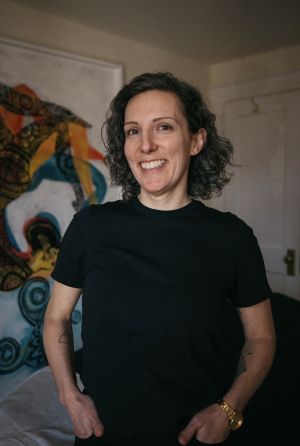
Alicia Wright, candidate for the degree of M.Ed. in Counselling
Supervisors: Drs. Tanya Surette & Inna Viriasova
Project Title: The Inside of Coming Out: An Exploration of the Subjective Embodiment of LGBTQ+ Identity Recognition in Adulthood
Award: SSHRC CGRS Masters
Research Summary: Alicia’s research is a qualitative exploration of subjective embodied experiences of queer identity transformation among lesbian, gay, bisexual, transgender, queer (LGBTQ+), and otherwise sexually and gender diverse (SGD) people in Nova Scotia who have come to recognize their identity in adulthood. This inquiry into LGBTQ+ self-discovery stems from the concept of coming in, or the inward, subjective process of recognizing and understanding one’s sexual or gender identity, which is related to, yet distinct from, coming out, often understood as a social act of explicit disclosure. For adults who come to recognize queer identity later in life, this process may be especially nonlinear and emotionally complex. Importantly, these experiences may not be solely cognitive or narrative, but also embodied, involving affective or bodily experiences alongside shifts in how individuals feel, orient themselves, and inhabit the world.
This research draws upon Sara Ahmed’s queer phenomenology to explore identity transformation as an embodied process of orientation through which individuals negotiate comfort, dissonance, livability, and relational positioning within cis-heteronormative worlds. Using micro-phenomenologically informed interviewing, this study invites participants to reflect on specific lived experiences before and after LGBTQ+ recognition. Through interpretative phenomenological analysis, this research seeks to develop a nuanced understanding of participants’ lived experiences and the meanings they make of identity transformation.
As a future counselling therapist, Alicia believes that experiences of LGBTQ+ identity recognition in adulthood deserve attention, even when their meaning remains uncertain. This research strives to acknowledge and honour experiences of identity shifts that may occur before a coherent narrative can easily be placed on them. In this way, we might better understand how to accompany ambiguity, validate implicit knowing, and build trust through affirmative care.
Personal Bio: Alicia Wright holds a Bachelor of Science degree in psychology and is currently a Master of Counselling student at Acadia University in Nova Scotia. Alicia’s interest in the relationship between identity and embodied experience stems from her more than twenty-year career as a massage therapist, where she takes a holistic, healing-centred approach to care, paying particular attention to the ways in which significant life transitions may manifest as patterns of tension in the body. As a gay woman, Alicia cares deeply about supporting queer experiences, advancing LGBTQ+ health, and contributing to strengths-based queer scholarship. Alicia is also the co-editor of a forthcoming collection of stories about LGBTQ+ identity recognition in adulthood, under contract with the University of Regina Press. Outside of her academic and professional pursuits, Alicia enjoys life as a mother, a wife, and a dog mum, while savouring opportunities for cooking, writing, hiking, and being.
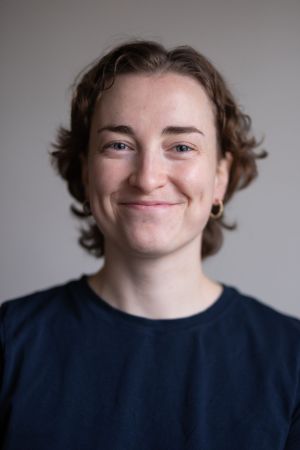
Rayona Silverman, candidate for the degree of PhD in Educational Studies
Supervisor: Dr. Emily Bremer
Project Title: Quality Participation in Active Play for Children and Youth with Disabilities in the School Setting
Award: SSHRC CGRS Doctoral
Research Summary: To explore how quality participation (QP) in active play can be fostered for children and youth experiencing disabilities (CYD) within the Canadian school system.
Personal Bio: Rayona Silverman is a current PhD Candidate working at Acadia University under the supervision of Dr. Emily Bremer. Rayona has experience in research with disability, physical activity, sport, and health promotion. Her prior work has focused on facilitating inclusive practices in research spaces for individuals experiencing disability. Rayona's current research explores quality participation experiences in active play for children and youth experiencing disability, alongside supports for educators who work with children and youth experiencing disability. Alongside her research, Rayona currently works as the S.M.I.L.E. Program Coordinator at Acadia University, working to support the Sensory Motor Instructional Leadership Experience (S.M.I.L.E.) program in providing adapted physical activity opportunities for individuals experiencing disability across Nova Scotia.

Olivia Kempster, candidate for the degree of MSc Psychology
Supervisor: Dr. Cara MacInnis
Project Title: How We Connect, How We Cope: Emotion Regulation as a Mediator between Attachment and Sexual Satisfaction in Couples Coping with Sexual Interest/Arousal Disorder
Award: SSHRC CGRS Masters
Research Summary: Sexual desire is key to sexual well-being (e.g., sexual satisfaction), relationship satisfaction and overall life satisfaction. Distressing and persistent low sexual desire (i.e., sexual interest/arousal disorder[SIAD]) is linked with poorer sexual outcomes for both members or the couple, and is among the most common reasons for couples to seek sex therapy, highlighting the need to identify risk factors and treatment targets for this population. According to the interpersonal emotion regulation model (IERM) of women's sexual dysfunction, emotion regulation is an important mechanism of sexual satisfaction. Moreover, the IERM framework posits attachment as a potential distal factor for sexual satisfaction. Indeed, previous research found links between adaptive emotion regulation strategies (e.g., cognitive reappraisal) with better sexual outcomes, and maladaptive strategies (e.g., expressive suppression) with poorer sexual outcomes. Furthermore, attachment anxiety and avoidance is linked with poorer emotion regulation strategies and lower sexual satisfaction. However, emotion regulation pathways have yet to be examined through an attachment lens among couples coping with SIAD. Therefore, using the actor-partner interdependence framework, the objective of the proposed study is to investigate whether emotion regulation strategies account for the link between attachment and lower sexual satisfaction among couples coping with SIAD. Results from the proposed study may add to current theoretical understandings of sexual dysfunction and may inform attachment-based interventions targeting sexual satisfaction among couples coping with sexual dysfunction, promoting sexual well-being, and thus enhancing relationship satisfaction and overall life satisfaction.
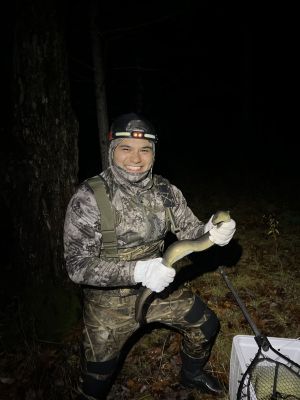
Walter Brooks, candidate for the degree of MSc Biology
Supervisor: Dr. Michael Stokesbury
Project Title: Barriers to Migration: Weaving Mi'kmaq and Western Knowledge to Track Silver American eels (Anguilla rostrata) from Freshwater to the Outer Bay of Fundy
Award: NSERC CGRS Masters - Indigenous Scholars Award & Supplement
Research Summary: The American eel (Anguilla rostrata) is a catadromous species with a complex 25+ year life cycle, making them difficult to study in research. They are born in the Sargasso Sea, presumably, as larvae, then migrate to coastal waters and change into glass eels. They change again into elvers and grow for several years until they reach the juvenile yellow eel phase. They continue to grow until they are sexually mature and transform into silver eels then migrate back to the Sargasso Sea to spawn and die. This species was designated as threatened after their population was noticed to be declining across their native range, and we do not know exactly why. Many reasons have been thought to be causing this such as climate change, predation, fishing, loss of habitat, and barriers to their migration such as dams and tidal gates for example. Because they are tough to study this leaves gaps in our knowledge of this species that may be preventing us from helping them. This study aims to answer some gaps in their migration and habitat use in the Bay of Fundy system. We spoke with local Indigenous communities and commercial fishers to gain knowledge on how to catch silver eels ethically. We tagged them with acoustic transmitters that track their movements as they migrate from freshwater, through the Bay of Fundy, and off to the sea to spawn. We tagged eels from Minas Basin, Nova Scotia, in the Shubenacadie River which has no barriers and will be compared to the Avon River, which has tidal gates. We hope to see how the gates delay their seaward migration. Once they leave the rivers and reach the bay, we also hope to learn how much they are predated upon and how that affects their migration success through this tidal system. We aim to use the information we find to help better manage the eels.
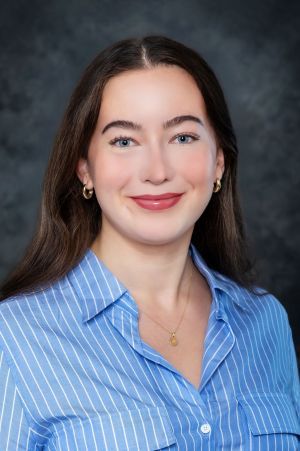
Ariel Coish, candidate for the degree of MSc Psychology
Supervisor: Dr. Anne Sophie Champod
Project Title: A Holistic Multiple Single-Case Study of Cognitive, Psychological, and Functional Factors Shaping Post-Treatment Outcomes After Stroke
Award: CIHR CGRS Masters
Research Summary: Stroke is the third leading cause of disability worldwide. Most stroke survivors experience multiple co-occurring symptoms during rehabilitation, and up to 80% of Individuals with right hemisphere stroke develop symptoms of spatial neglect, a highly disabling attention disorder. In addition to cognitive sequelae, stroke survivors commonly experience physical impairments that directly reduce independence in Activities of Daily Living (ADL.s),and psychological symptoms that worsen functional outcomes, reduce quality of life, and increase healthcare use. These domains interact in clinical practice to shape recovery trajectories. Understanding these interactions is essential for developing patient-centered rehabilitation strategies. This study will explore how cognitive, psychological, and demographic factors relate to functional outcomes (ADL.s) among stroke survivors undergoing prism adaptation treatment for spatial neglect. Guided by a biopsychosocial framework, the proposed study is based on the conceptual hypothesis that functional recovery is influenced by cognitive, physical, psychological, and demographic factors. This study will use a multiple, structured, single case-series design, which is well-suited for stroke rehabilitation research where individual variability makes group-level inference less informative. Fifteen stroke survivors with right hemisphere stroke and spatial neglect will be selected from the EMPATH clinical trial. Data will be collected at baseline and one-month post-treatment to identify combinations of factors that may be associated with better or poorer functional improvement. Findings will have direct clinical relevance and aim to contribute to improved functional outcomes and quality of life for stroke survivors.

Vanessa Pardo Nunez, candidate for the degree of MSc Psychology
Supervisor: Dr. Joseph Hayes
Project Title: Repetitive Negative Thinking and Brooding in Major Depressive Disorder: Associations with Depression-Anxiety Coupling Strength
Award: CIHR CGRS Masters
Research Summary: Major Depressive Disorder (MDD) is a prevalent mental illness that significantly contributes to long-term disability. Despite effective treatment, MDD patients often experience recurrent depressive episodes, and a comorbid anxiety disorder increases the risk of relapse. Identifying modifiable factors that can initiate a relapse is therefore essential. Prior research found that when depressive and anxiety symptoms are more closely linked, the risk of relapse in MDD increases. This dynamic relationship is known as the Depression-Anxiety Coupling Strength (DACS).In addition to anxiety, rumination, characterized by persistent, repetitive negative thinking and brooding (passive, repetitive focus on the symptoms, causes, and consequences of depression), is associated with depressive symptom severity and is influenced by anxiety symptoms. The Perseverative Thinking Questionnaire (PTQ) and the Ruminative Response Scale - Brooding Subscale (RRS-B) assess rumination, brooding and related cognitive processes. We will examine which of the PTQ or RRS-B is more related to DACS to determine whether ruminative thinking relates to the coupling of depression and anxiety, and whether the depressive quality of the ruminative thoughts is necessary to mediate this relationship. We will analyze data from an 18-month multi-site observational study of patients with remitted MDD. We hypothesize that, based on RRS-B measuring passive and repetitive thoughts about depression, it will be more related to DACS, rather than the more depression-independent PTQ. Understanding these co-occurring factors can improve early intervention strategies for MOD, helping clinicians address potential relapses before they escalate into full episodes, thereby promoting sustained patient well-being.
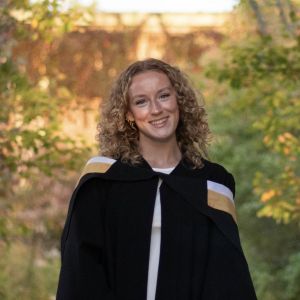
Madeline MacNeil, candidate for the degree of MSc Biology
Supervisor: Dr. Laura Ferguson
Project Title: Impacts of Host Blood Meal Choice and Energy Reserve Composition on Overwintering Survival in Black-Legged Ticks, Ixodes scapularis
Award: NSERC CGRS Masters
Research Summary: In Canada, the black legged tick has invaded and caused a drastic increase in the incidence of several tick-borne diseases, including Lyme disease. With climate change we can expect to see a continued northward expansion of tick populations and therefore an increase in cases of these tick-borne diseases. This is alarming as cases of Lyme can be extremely debilitating, and even fatal. Both the overall abundance of ticks and the incidence of Lyme disease are influenced by the ability of ticks to survive the cold, as they are sensitive to low temperatures. Further, black-legged ticks who are infected with Lyme have a higher tendency to survive the winter than uninfected ticks, however the mechanism behind this is increased survival is unknown. Maritime tick populations are poorly understood, which contributes to these gaps in our knowledge on tick behaviour, physiology, and ecology. It is critical we gain a better understanding of these populations, as Nova Scotia in particular experiences 12-times more Lyme disease cases compared to the national average. With this, my project aims to determine what is driving this increased overwintering survival in infected black-legged ticks. To do so, I plan to identify the sources of blood meals and measure the energy stores (fat, carbohydrate, and protein) in uninfected and infected ticks in Nova Scotia. I will determine if either of these factors correlate with the infection status and therefore differences in survival in these ticks. I will also be providing up-to-date information on the tick populations and consequent disease prevalence in Nova Scotia, by sampling for ticks throughout various counties in the province.
Personal Bio: I am currently a first year Master’s student in the Biology program at Acadia University. I am providing an updated surveillance record for ticks in Nova Scotia, as well as studying their overwintering physiology. My interest for research sparked in the second year of my undergraduate degree, which I also completed in Biology at Acadia, when I joined Dr Laura Ferguson’s lab as a summer field technician. I was quickly fascinated by vector biology, and went on to do my Honours with Dr Ferguson and Dr Todd Smith on cold tolerance and the renal system of mosquitoes. Getting to work in and with both labs fostered my love and desire to further pursue research. When the opportunity to continue researching through the Graduate program at Acadia presented itself, I knew this was what I wanted to do. When I am not in the field or lab, I enjoy reading, crafting, fitness, and spending time with friends.
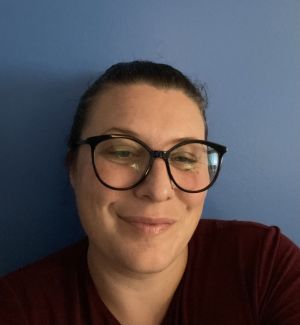
Katrina Hayes, candidate for the degree of MA in Sociology
Supervisor: Dr. Lesley Frank
Project Title: Can Beggars Be Choosers? How Families Navigate Food Charities With and Without Agency
Award: SSHRC CGRS Masters
Research Summary: The research aims to explore how families in Kings and Hants Counties, Nova Scotia, navigate food charity programs. Focusing on their experiences and agency in food choice, the research will address how these families may experience a lack of dignity while using charity food systems and how they cope with this. This study seeks to understand the effects of persistent poverty in Nova Scotia, particularly among lone-parent families, and further analysing how women-led lone parent families have the highest rates of child food insecurity where poverty can be a driver of food insecurity in these families. The methodology includes semi-structured interviews with families utilising food charity programs. A environmental scan of food bank policies will also be done. This research aims to contribute to the understanding and meaning of agency in food choice for food insecure and impoverished families in Kings and Hants Counties in Nova Scotia.
Laurel Berg-Khoo, candidate for the degree of MSc in Biology
Supervisor: Dr. Zoe Panchen
Project Title: Pollen Viability of High Arctic Plants in Response to Experimental Warming and Moisture
Award: NSERC CGRS Masters
Research Summary: Arctic tundra plants are well adapted to growing in harsh, cold environments where most plants are unable to survive, providing essential habitat for Arctic wildlife. However, the climate of the Canadian Arctic is changing much more rapidly than the global average. Warmer temperatures, increased rainfall, and more frequent extreme weather events have been reported across the region, making the future survival of many Arctic species uncertain. Changes in the timing and success of flower and seed development have already been seen in recent decades, but we currently have a limited understanding of how climate change affects pollen viability in Arctic plants, i.e., the percentage of pollen grains that can fertilize flower ovules and produce seeds. High temperatures and drought are believed to reduce pollen viability in some crop plants. Therefore, using various combinations of greenhouse-like warming chambers and snow fencing, I plan to investigate whether changes in temperature, depth and duration of snow cover, and soil moisture levels influence the pollen viability of local plant species at Cape Bounty, Melville Island, Nunavut. Pollen from purple saxifrage, Arctic willow, snow buttercup, and Arctic false wallflower growing in different temperature, snow, and moisture conditions will be collected throughout the summer, and tested to determine the percentage of viable pollen. I predict that higher temperatures will reduce pollen viability in these species, but increasing the snow cover and soil moisture may counteract the effects of warmer temperatures. By building on the existing knowledge of how climate change affects different stages of Arctic plant reproduction, we will be better equipped to protect vulnerable Arctic ecosystems as climate change progresses.
Contact Us
The Graduate Studies Office can be reached Monday to Friday from 8:00 a.m. until 4:00 p.m. AST.
Please send admission inquiries to:
gradadmissions@acadiau.ca 902-585-1914
Connect with your Department/School advisor:
Graduate Advisors
Mailing Address
Acadia UniversityGraduate Studies
Wolfville, NS B4P 2R6
Canada
Courier Address
15 University AvenueAcadia University
Wolfville, NS B4P 2R6
Canada
Ph. 902.585.2201
Staff
Dr. Kate Ashley
Vice-Provost Academic Policy & Graduate Studies
Theresa Starratt
Graduate Studies Officer
Horton Hall, Room 214
Students
Acadia Graduate Student Association (AGSA) represents current Graduate Students ags@acadiau.ca