

Dr. Natalie J. Swain on the new flavour of controversy Grand Theft Auto VI is serving

There's a new grand theft auto in town--and this time, it's woke. Well, woke-ish, anyway. We spoke with Dr. Natalie J. Swain, co-founder of the Acadia Centre for Critical Play, about the evolution of what was once the most controversial game in history and what it says about our current cultural moment.
Even for those of us who haven't touched a console since the N64, news about the release of Grand Theft Auto VI last week is impossible to avoid.
Both CTV and CBC ran coverage about the new game, interviewing two Acadia faculty members—Dr. Jon Saklofske (English & Theatre) and Dr. Natalie J. Swain (History & Classics)—who also happen to be co-founders of the Acadia Centre for Critical Play (ACCP).
The GTA series has stirred up its fair share of controversy since the release of the first game in 1997. In fact, in The Guinness World Records 2008 and 2009 Gamer's Edition it was named the most controversial game of all time for its depictions of violence and sexualized content.
But players and reviewers are singing a different tune upon the release of the latest installment in the series, and the game is experiencing a new form of backlash.
In this sixth installment of the GTA series, the publisher cut back elements of the game that have been most controversial, like the ability to hire and then murder sex workers. And for the first time, one of the playable characters is a woman. In her interview with CBC, Dr. Swain says this evolution shows how times have changed since the release of GTA V 13 years ago.
The new game centres the romantic relationship between Lucia and her partner, Jason, and players can go through the game as either of these characters. If a player chooses Jason, they are rewarded for doing emotional labour and acts of service for Lucia.
And this element of gameplay has a segment of the internet enraged as some gamers are taking issue with the "simp" behaviour the game encourages players to take on.
Dr. Swain, on the other hand, says she is "cautiously optimistic" about what this means for our current cultural moment.
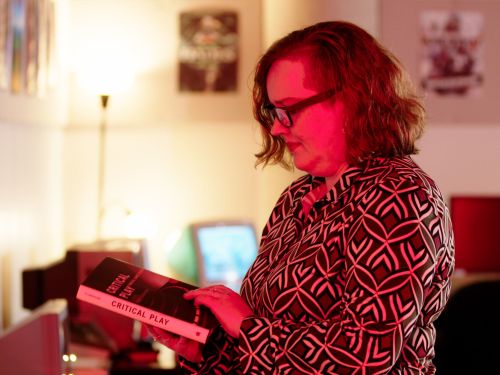
Of course, the game is still set in a criminal underworld, and while Jason is out here painting Lucia's place, the two of them are also doing crimes and committing acts of violence.
Dr. Swain says, "the discussion shouldn't be 'this game allows violence,' but asking why some men are so angry about having to engage in a positive, loving relationship and instead wanting to use the game to commit acts of graphic violence against marginalized groups, including women and people of colour."
She says that we can't blame the game for the way some players are reacting to it. The world of the game is a satirical version of our reality, says Dr. Swain, "and we do unfortunately live in a culture that glorifies violence, racial and sexual violence, and people who buy into those narratives bring them into the game."
But it's clear to Dr. Swain that with the addition of Lucia and the relationship elements the game developers were "trying to not perpetuate certain kinds of violence this time around."
"We're at such a volatile moment politically, globally with rising fascism and the normalizing of it," says Dr. Swain. "I can't speak for the creators' motivations but there is more conscientiousness of wanting to comment on it but not foster it."
"I imagine that they feel the need to be more responsible at this time for those representations."
She's hopeful that some men who play the game and earn in-game rewards for bringing their partner flowers and cooking dinner learn from it.
"I think any modelling of healthy relationships is a positive," she says. "So many romantic relationships presented to us are not positive models of relationships. They are not supportive, loving, or kind. Maybe making people embody healthier relationships won't change everyone, but I hope it will start conversations between partners."