

Passing it forward: Dr. Emily Bremer’s inclusive impact earns national recognition
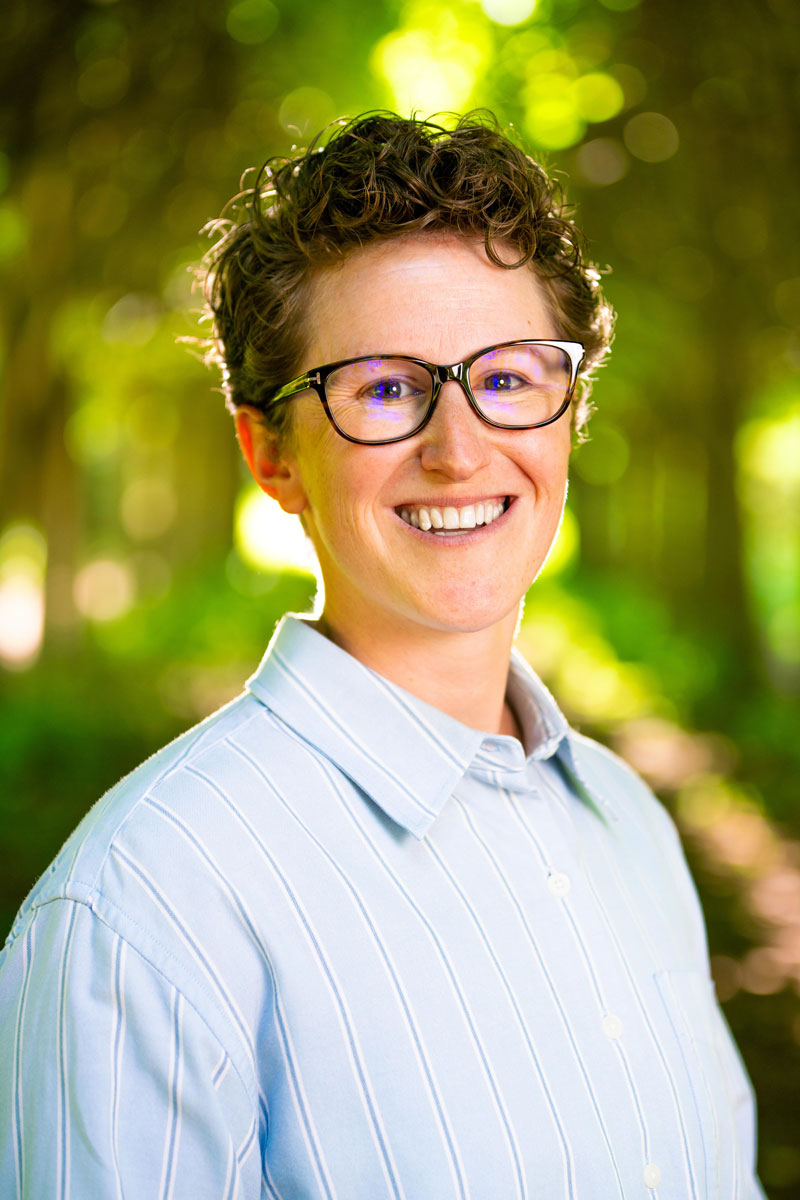
Ahead of her induction into the Royal Society of Canada, Acadia’s Dr. Emily Bremer and the students she mentors reflect on the people, the program, and the passion for movement behind this honour.
The day before she was due to fly to New York City, Ngaire Leach walked into a meeting with her honours supervisor and admitted what she’d been thinking all week: “I don’t think I can do this.”
The Acadia University Kinesiology student was about to present her research at the International Physical Literacy Conference. Dr. Emily Bremer didn’t miss a beat.
“She said, ‘Ngaire, the great thing about research is that the person who knows the most about the project is you,’” Ngaire recalls. “‘You are the expert, you put the time in, you know this.’”
Ngaire (‘24), now an occupational therapist, still leans on that advice. It captures what students say again and again about Dr. Bremer: a professor who believes in them long before they believe in themselves.
On November 13, Dr. Bremer, Canada Research Chair in Healthy Inclusive Communities and Associate Professor in Acadia’s School of Kinesiology, will be inducted into the Royal Society of Canada’s College of New Scholars, Artists and Scientists in Ottawa. The College recognizes the emerging generation of Canada’s intellectual leaders.
Acadia's Dr. Alex Marland, Professor of Political Science and Jarislowsky Chair in Trust and Political Leadership is being inducted as a Fellow of the Royal Society of Canada on the same night.
“I feel incredibly honoured,” says Dr. Bremer. “I feel fortunate to receive this recognition so early in my career, and I am thankful for the mentors and colleagues that have helped me get to this point.”
A path that leads back to Acadia
Dr. Bremer’s story begins with a mentor, too. In her third year at Ontario Tech University, she took a course with Dr. Meghann Lloyd (‘01), an Acadia Kinesiology graduate and S.M.I.L.E.â alumna, who introduced her to adapted physical activity and to research as a career.
Around the same time, she began coaching soccer, and later hockey, for athletes experiencing disability. On the field and the ice, her research came to life.
“I was able to see the importance of teaching soccer and hockey skills to the athletes and how it opened up opportunities for them to engage in sport and other physical activities,” she says. “I also saw the joy and belonging that these athletes had when getting to play.”
After a master’s with Dr. Lloyd, a PhD at McMaster University, and a postdoctoral fellowship at the University of Toronto, she arrived at Acadia in 2022, though not for the first time. She’d played in the Gunn Balderson soccer tournament on campus as a kid, and she’d been hearing about S.M.I.L.E. from Dr. Lloyd for years.
“Movement is everything”
Dr. Bremer’s research explores how physical activity supports children and youth experiencing disability, and what stands in their way. Beyond the cost, time, and transportation hurdles any family knows, these young people often face another layer: inaccessible buildings, loud and overwhelming gyms, or programs without enough trained leaders to support them.
The numbers tell the story. A national study Dr. Bremer co-authored found that only 17.2 per cent of Canadian children and youth with disabilities get the recommended 60 minutes of moderate-to-vigorous physical activity each day, and just 4.6 per cent meet Canada’s full 24-hour movement guidelines for physical activity, screen time, and sleep.
“Movement is everything,” says Dr. Bremer. “It’s so important across all aspects of a child’s life and development. From supporting their physical health, to teaching important social and life skills, to being engaged and ready to learn in a classroom. Movement supports all of that.”
She sees it at home, too, biking through the Valley in summer and skiing and playing hockey in winter with her partner, kids, and friends.
S.M.I.L.E.: where research meets community
Nowhere is Dr. Bremer’s work more visible than at S.M.I.L.E. (Sensory Motor Instructional Leadership Experience), which has paired Acadia student volunteers one-on-one with children and adults experiencing disability since 1982. For 25 years, the program was led by Dr. Roxanne Seaman, who took the helm in 2001 and grew it into what many consider an essential part of the Acadia experience, with about 400 student volunteers each semester. Dr. Bremer worked alongside her as research director before recently succeeding her as Director.
“S.M.I.L.E. has always been an excellent example of everything that I try to do,” says Dr. Bremer. “We’re not only providing a quality physical activity experience, but we’re creating a community that values physical activity and centres disability in what we do.”
Rayona Silverman, S.M.I.L.E.’s Program Coordinator and one of Dr. Bremer’s PhD students, says Dr. Bremer’s research shapes the program week to week, from participant assessments each term to evidence-based volunteer training. Ngaire’s honours project, for example, found that a year of S.M.I.L.E. improved participants’ physical literacy, and Dr. Bremer expanded those pilot findings into a larger, long-term study.
A separate project Dr. Bremer and Dr. Seaman designed with colleagues confirms what the S.M.I.L.E. community has long sensed: the program changes its volunteers, too.
“The biggest thing is just how S.M.I.L.E. stays with our students long after they leave Acadia,” Dr. Bremer says. Many pursue careers in education and health care, and others describe a lasting shift in how they see disability. “We heard time and again that even 20 years post-graduation, S.M.I.L.E. stood out as central to their Acadia experience.”
Students at the centre
For Dr. Bremer, one of Acadia’s great advantages is access. Undergraduates work directly with her, join a large, collaborative lab, and connect with leaders across her national network.
Rayona says Dr. Bremer is willing to “walk the walk” on advocacy, from helping students attend conferences to championing accessibility and funding.
“Research spaces can sometimes be difficult to feel like you fit in,” Rayona says. “With Emily’s lab, and with Emily’s supervisorship, I have never felt like an outsider.”
Ngaire, who signed up for honours research on a whim after Dr. Seaman mentioned in class that a new professor was looking for students, has simple advice for anyone considering it: “Do it, do it, do it!” She adds, “Doing research with Emily is one of the best choices I ever made at Acadia.”
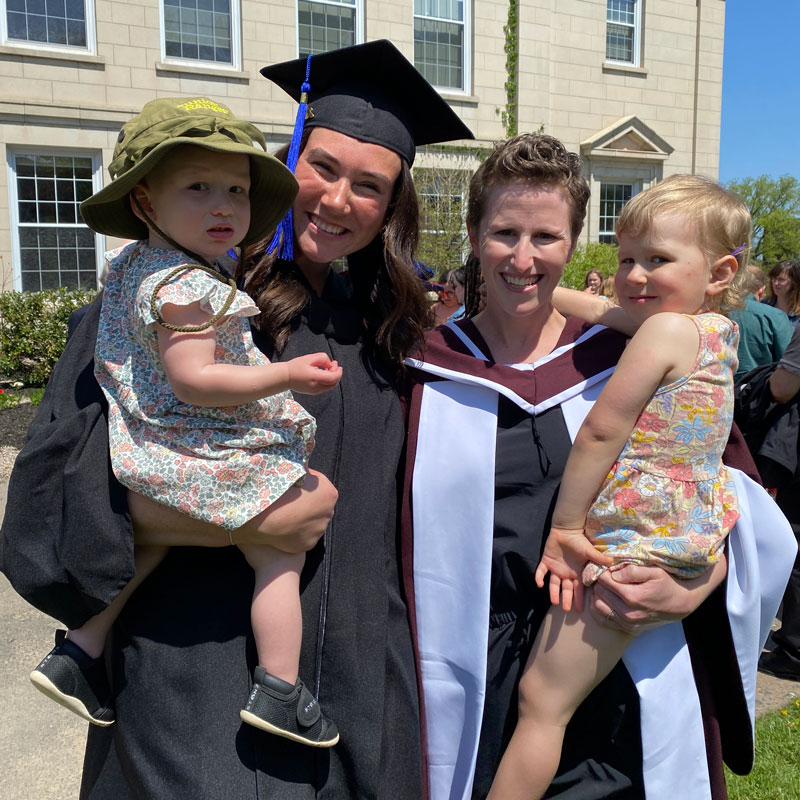
The relationship grew well beyond research. Ngaire calls Dr. Bremer her “second mum” at Acadia, someone who celebrated her wins, picked her up from the airport, and had her over for dinner. Ngaire babysat Dr. Bremer’s daughters and even taught them to swim (“much to their dismay,” she notes). Two years after graduating, she and Dr. Bremer still trade life updates.
“When I think of Emily, I see so much more than an amazing professor who helped shape my academic career,” Ngaire says. “I see a friend who believed in me and will always be in my life.”
A new home for inclusive movement
This fall, Dr. Bremer’s work gains a permanent home. The $1.1-million Inclusive Movement and Health Lab at the Acadia Athletics Complex is nearly complete, with her team moving in within weeks and a grand opening planned for spring.
The lab combines a movement assessment and intervention space, fitness testing equipment designed for children, and dedicated areas for cognitive assessments and student researchers, a combination Dr. Bremer says is unique in Atlantic Canada. It will also host community programs, from movement skill sessions for young children to small-group exercise classes for youth.
For Dr. Bremer, the lab, the program, and the Royal Society honour all point toward the same goal.
“My hope would be that we live in a society where physical activity is valued,” she says, “and all individuals can engage in physical activity in a way that is meaningful and valued for them as an individual."